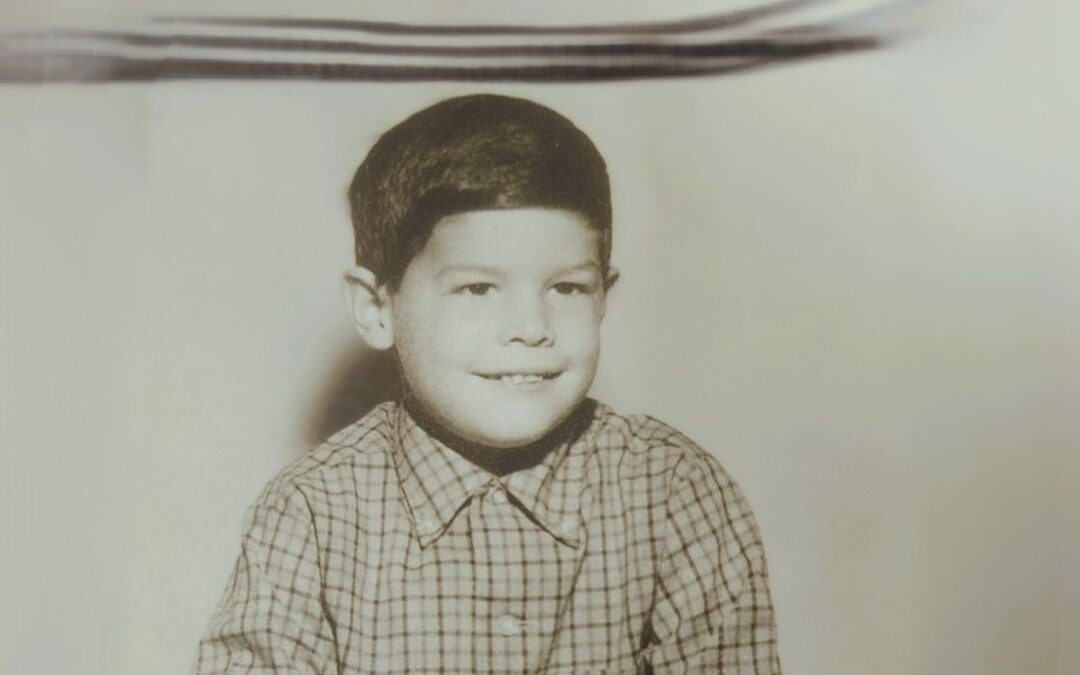
The Lies That Save Us—and the Lies That Eventually Own Us

I learned to lie as a child. At seventeen, I learned something much more dangerous: sometimes lying works.
Childhood Survival Skills That Hurt Us as Adults
I have been a liar.
There.
That’s an excellent way to begin a self-help article.
Buy my book!
Listen to my podcast!
Trust me!
Actually, I don’t believe I’m a liar anymore.
But I was extraordinarily good at it.
And for years I blamed my mother.
Isn’t blaming your mother glorious?
If you’re writing a memoir called How I Killed My Mother, it’s practically a job requirement.
But one of the uncomfortable things about writing this memoir has been discovering that there’s a difference between understanding where a behavior came from and continuing to blame somebody else for what you did with it.
That’s a much less convenient lesson.
I Lied Long Before I Had a Good Reason
Let’s establish something before I turn teenage Jon-David into a tragic victim.
I was already lying as a kid.
Frequently.
Sometimes brilliantly.
I lied to get what I wanted.
I lied to get out of trouble.
I lied because it was convenient.
I lied because I could think quickly and discovered that adults often wanted to believe the explanation that caused them the least inconvenience.
For example, one evening I came home after smoking pot at my friend Andrea’s house.
Mom smelled it immediately.
“What is that herbal smell?”
Herbal?
Thank you, God.
Andrea lived next to a nursery.
So I explained that the nursery was filled with herbs and obviously the botanical fragrance had permeated my clothing.
Mom considered this.
Then she noticed my eyes were red.
Swimming, I explained.
Chlorine.
Then she noticed my hair was dry.
I hadn’t put my head underwater.
Obviously.
Mom accepted this.
And went to bed.
I probably should have received an Emmy.
Instead, I received something much more dangerous:
Evidence that lying worked.
LISTEN: Jon-David’s outrageous serialIzed podcast of mobsters, Hollywood, hair salon life, rave culure, true crime, and unbelievable stories inspired by a life that rarely went according to plan.
Start listening to
THE MAFIA HAIRDRESSER CHRONICLES →

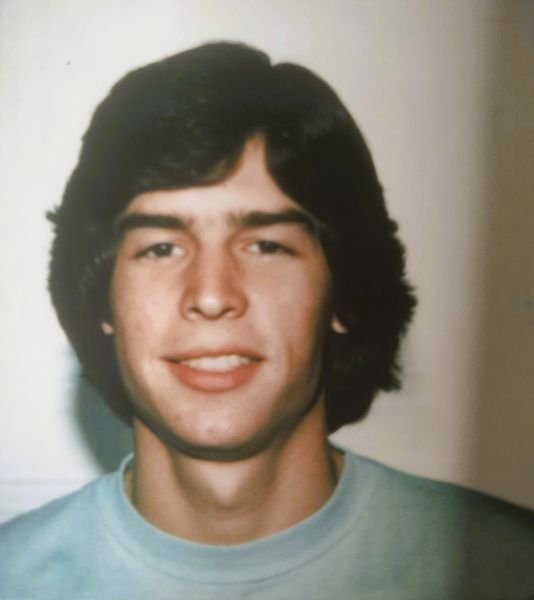
But at Seventeen, Lying Became Something Else
After my mother discovered I was gay, my parents sent me to a psychologist.
Mom believed the psychologist would somehow turn me straight.
I believed the psychologist would tell Mom there was nothing wrong with me.
So we made a deal.
I’d cooperate.
I’d stop seeing my boyfriend, Chuck, while I was being evaluated.
And if the psychologist concluded that I was mentally healthy, my parents would accept that I was gay and allow me to continue seeing Chuck.
Guess who was right?
Me.
The psychologist told my parents I was gay.
Healthy.
Normal.
And in a healthy relationship.
I thought I’d won.
Mom did not.
On the drive home, she began talking about another psychologist.
Medication.
Military school.
Some sort of camp.
And eventually:
Shock treatments.
That’s when something changed inside me.
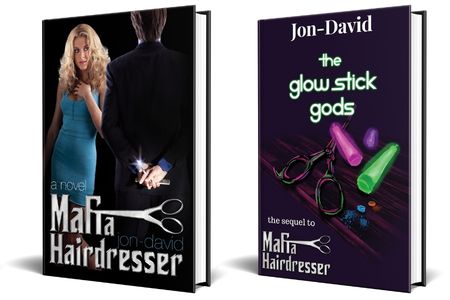
THE STORIES THAT STARTED IT ALL
Mafia Hairdresser, & The Glow Stick Gods – two outrageous novels of mobsters, Hollywood, celebrities, cocaine, “Tina”, rave culture, and survival. Inspired by Jon-David’s unbelievable life.
Discover the Books →

Fear Is an Excellent Teacher—and Sometimes a Terrible One
I was sitting behind my parents in our Ford Econoline van.
Mom was furious.
Dad was driving silently.
And I was scared.
Really scared.
I looked at my father and decided he was weak.
He wasn’t defending me.
He wasn’t confronting my mother.
He was allowing the stronger person in the car to decide what happened next.
Then I looked at Mom.
She was powerful.
She made the rules.
She controlled the situation.
She intended to win.
And somewhere during that ride home, my frightened seventeen-year-old brain constructed a philosophy for life:
There are winners and losers.
I would never be a loser.
I would never be weak.
I would never allow somebody else to rule me.
I would be strong.
I would win.
And if winning required lying?
Then I would lie.
At the time, this didn’t feel like developing a character flaw.
It felt like survival.

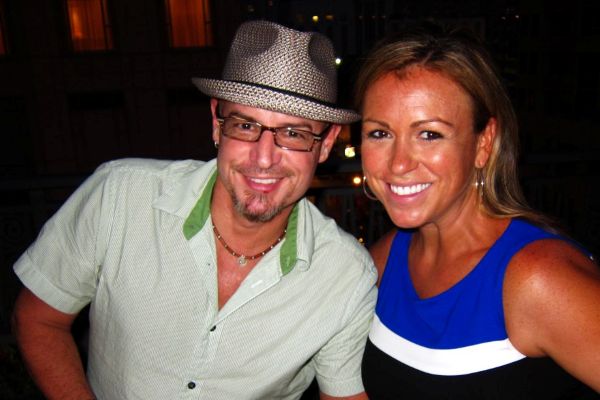
So I Told My Parents Exactly What They Wanted to Hear
When we got home, I asked Mom and Dad to sit down.
I announced that I’d had an epiphany.
I had not had an epiphany.
I had a strategy.
I told them I’d been confused.
I told them the counseling had opened my eyes.
I told them I realized I was actually heterosexual.
I was going to put all this gay nonsense behind me.
I was going to become a man.
And then I added the masterpiece:
I was going to become an airline pilot.
This was perfect.
I’d talked about becoming a pilot when I was younger.
My parents loved the idea.
We knew a handsome Pan Am pilot named Roger who had a beautiful wife, a daughter and what appeared to be a perfect life.
Roger was practically heterosexuality with wings.
And apparently teenage Jon-David had also concluded that gay airline pilots didn’t exist.
So naturally, if I became a pilot, I would have to become straight.
It’s difficult to argue with this science.
My parents desperately wanted to believe me.
So they did.
And the shock-treatment plan disappeared.
My lie had worked.
Spectacularly.




Connect with Us on Social Media





YES. IT’S REALLY CALLED
HOW I KILLED MY MOTHER
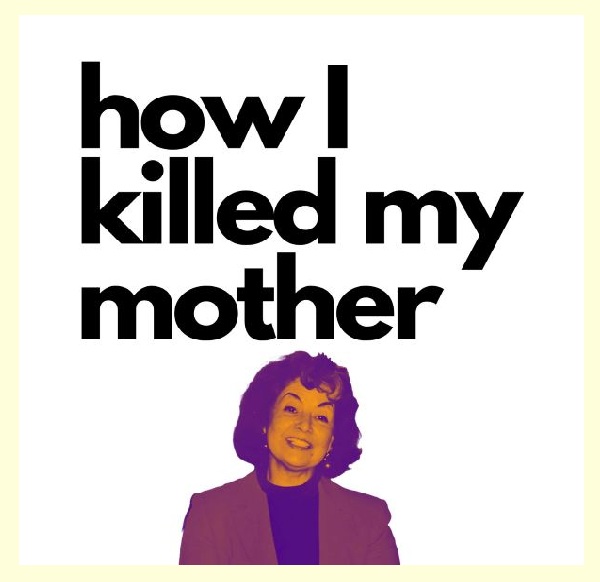
A funny, painful, and unexpectedly hopeful memoir podcast about mothers, sons, guilt, grief, forgiveness, and the unfinished relationships we carry with us – sometimes long after the people we love are gone.
LISTEN TO HOW I KILLED MY MOTHER→

That’s the Problem With Behaviors That Save Us
If something saves you once, your brain remembers.
Avoid confrontation and the danger disappears?
Avoidance works.
Make everybody laugh before they can hurt you?
Humor works.
Control everything so nobody can surprise you?
Control works.
Never depend on anyone?
Independence works.
Lie your way out of danger?
Lying works.
And sometimes it really does.
That’s the uncomfortable part.
We like life lessons to be clean.
“Lying never works.”
That’s nonsense.
Lying works all the time.
People lie and get the job.
People lie and avoid consequences.
People lie and preserve relationships.
People lie and make money.
People lie and get elected.
People lie to themselves and sleep beautifully.
The question isn’t whether a destructive behavior works.
The question is:
What does it cost you when you keep using it after you no longer need it?

My Emergency Exit Became My Main Entrance
I continued seeing Chuck.
Secretly.
For nearly two years, I lied to my parents about where I was going.
Chuck sneaked into my bedroom.
I sneaked into his.
We stayed in hotels.
We built an entire relationship inside a parallel universe my parents weren’t allowed to see.
And I felt justified.
They had broken their agreement with me.
So I would break mine with them.
They lied first.
Therefore, my lies didn’t count.
Very convenient.
I wasn’t merely lying anymore.
I had developed a philosophy that made lying moral whenever I decided the other person deserved it.
That’s dangerous.
Because once you’re the person deciding when dishonesty is justified, amazingly, you tend to win every case.
I Thought Being a Winner Meant Never Losing
That Ford Econoline philosophy followed me.
Winners and losers.
Strong and weak.
Rulers and ruled.
I would be the winner.
I would control my life.
I would get what I wanted.
And if somebody stood in the way?
Outthink them.
Outmaneuver them.
Charm them.
Manipulate them.
Leave them.
Lie if necessary.
I wish I could say I left that philosophy behind when I moved out of my parents’ house.
I didn’t.
Parts of it followed me for decades.
It helped make me ambitious.
It helped make me fearless.
It helped me become an entrepreneur.
It helped me walk into rooms where I knew nobody and behave as though I belonged there.
It also made me a pushy asshole sometimes.
There.
Saved you the trouble of writing that in the comments.

Survival Skills Don’t Know When the Emergency Is Over
This may be the biggest thing I’ve learned from revisiting these years.
A survival skill doesn’t automatically retire when the danger passes.
It keeps reporting for work.
The child who learns to disappear during conflict may become the adult who cannot communicate with a spouse.
The child who earns love through achievement may become the adult who can’t stop working.
The kid who learns to make everybody laugh may become the adult who jokes whenever something hurts.
The teenager who decides nobody will ever control him again may become the man who has to control everybody else.
And the seventeen-year-old who learns that lying can keep him safe may become an adult who lies when telling the truth would actually be easier.
The behavior isn’t stupid.
It may once have been brilliant.
It’s simply working at a job that no longer exists.
I Lied to Myself Too
Here’s the really embarrassing part.
I thought I was fooling my parents.
Eventually, I realized I had also fooled myself.
I told myself I was strong.
I told myself I was winning.
I told myself I was ruling my own life.
But was I?
I was living secretly.
I couldn’t bring my boyfriend home honestly.
I couldn’t tell my parents where I was going.
I was constructing fake stories every day.
That isn’t freedom.
That’s a prison where you’re also responsible for writing the daily screenplay.
And continuity is exhausting.
Who did I tell Mom I was with?
Where did I say I was going?
What time did I supposedly leave?
Who knows which version?
Lying requires tremendous administrative support.
Truth is much easier on the filing system.


Eventually, the House of Cards Fell Down
Of course we got caught.
Chuck had sneaked into my bedroom one Saturday night.
The next morning was what we called Funday-Sunday.
My parents were supposed to leave for the swap meet.
Chuck was waiting in my bedroom.
I was waiting in the dining room for my family to get the hell out so I could make breakfast for my boyfriend.
Then Mom decided to take out the trash.
On the way to the garbage cans, she passed the glass door to my bedroom.
There was Chuck.
Sitting fully dressed on the edge of my bed.
Reading People magazine.
Mom screamed for Dad.
“Get the shotgun! We have an intruder!”
Yes.
That happened.
Dad actually got the shotgun.
Chuck came outside.
Mom was screaming.
My brother came running.
I came outside last because I was mostly irritated that everybody was taking so long to leave for the swap meet.
And there stood the secret I’d successfully maintained for almost two years.
Reading People magazine had finally brought down the entire operation.
Then My Father Gave Me a Choice
My father did something that day I didn’t fully appreciate until much later.
He stopped being weak.
He didn’t shoot Chuck.
Thank you, Dad.
He didn’t scream.
He didn’t argue.
He simply told me:
Chuck could leave and I could stay.
Or I could leave with Chuck.
That was it.
For the first time, I couldn’t lie my way around the decision.
There was no clever story.
No fake airline career.
No imaginary heterosexuality.
No loophole.
Choose.
I chose Chuck.
I walked away from my parents’ home with less than two hundred dollars, my driver’s license and the clothes I was wearing.
I thought:
Fuck ’em.
I also thought:
I’m the winner.
And underneath all that bravado?
I was scared as hell.
Maybe Winning Isn’t What I Thought It Was
It took me decades to reconsider what happened that day.
At the time, I thought winning meant getting my way.
Today I think winning may have been something else entirely.
My father forced me to stop lying.
Not forever.
I still had plenty of character development ahead of me.
But in that moment he said, essentially:
If this is who you are and this is the life you’re choosing, then choose it.
No more pretending.
No more sneaking.
No more using my parents’ home while secretly violating their rules.
I was an adult.
So be one.
I hated him for it.
And today?
I think he gave me a gift.
An extremely inconvenient gift.
But a gift.
We Don’t Have to Hate the Person We Became to Change
This is where I think personal growth gets unnecessarily cruel.
We look backward at our younger selves and say:
Why did I do that?
Why was I such an asshole?
Why did I stay?
Why did I lie?
Why did I manipulate?
Why couldn’t I just tell the truth?
Sometimes the answer is:
Because it worked.
It got you through something.
It protected you.
It gave you control when you felt powerless.
That doesn’t mean you should keep doing it.
And it doesn’t absolve you of the people you hurt.
Understanding isn’t absolution.
But understanding gives you somewhere to begin.
I don’t need to hate seventeen-year-old Jon-David for lying his way out of something that terrified him.
I understand why he did it.
But adult Jon-David doesn’t get to use a frightened seventeen-year-old as an excuse for every lie that came afterward.
At some point, the emergency ended.
At some point, the survival skill became a choice.
And at some point, the choice became mine.
Maybe That’s What Growing Up Really Is
Not becoming perfect.
God, how boring.
Not erasing your childhood.
Not blaming your parents forever.
And not pretending your parents had nothing to do with who you became.
They did.
My mother taught me things.
My father taught me things.
Some intentionally.
Some accidentally.
Some beautifully.
Some painfully.
But eventually you reach an age when you have to look at everything they handed you and decide:
What am I keeping?
Confidence?
Keeping it.
Humor?
Definitely.
Independence?
Yes.
Determination?
Absolutely.
The belief that there are only winners and losers?
Throwing that one out.
Lying whenever I think it serves me?
That can go too.
Because I finally learned something teenage Jon-David didn’t know.
A survival skill can save your life and still become something you eventually need to survive.
— Jon-David

More From How I Killed My Mother
How I Killed My Mother is my memoir podcast about family, forgiveness, identity, humor, grief, spirituality and the things we learn from our parents—especially the lessons they never intended to teach us.
Listen to the podcast and join my mailing list (scroll down) at HowIKilledMyMother.com for new stories, bonus material and updates about the upcoming memoir.
And maybe ask yourself:
What behavior once protected you—but is still running your life long after the danger disappeared?
Listen to How I Killed My Mother
How I Killed My Mother is a memoir podcast about mothers and sons, depression and hope, family and forgiveness, caregiving, spirituality, humor, death, and the uncomfortable business of discovering who we really are.
The podcast also became the foundation for my upcoming memoir, How I Killed My Mother.
This isn’t a story about having all the answers.
It’s about what happened when I finally started asking myself the questions.
If you’re standing at the bottom of something right now, I can’t tell you how long your climb will be.
I can only tell you that I’ve stood at the bottom, too.
Climb with me.
— Jon-David
0 Comments