
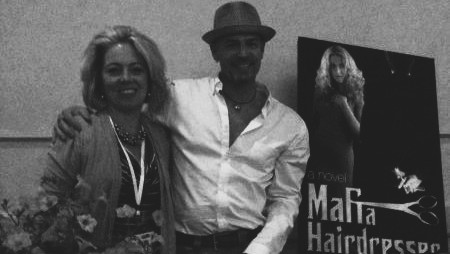
People occasionally seem surprised that the hairdresser can write. I used to be flattered. Now I think: Well, yes. I studied how.
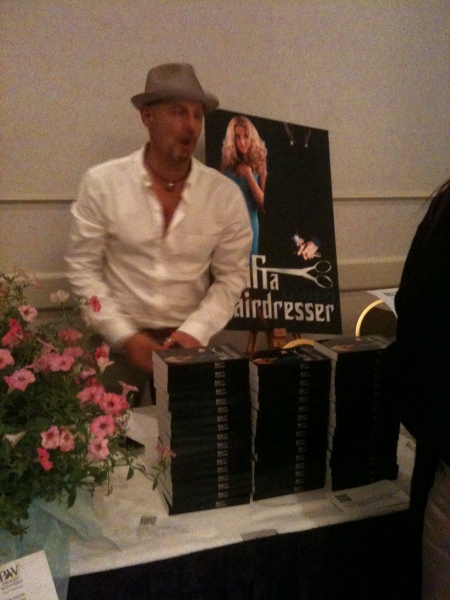
People Are Surprised I Can Write. I’m Starting to Find That Funny.
How a Hairdresser Became a Writer | Jon-David
There’s a compliment I’ve received for years that I have finally decided is slightly insulting.
“You can really write.”
Thank you.
But there’s often a tiny invisible second sentence hanging behind it.
Who knew?
I knew.
Because I worked at it.
I didn’t wake up one morning, put down my blow dryer and accidentally write a screenplay.
I studied screenwriting.
I took classes.
I went to workshops.
I learned structure.
I learned dialogue.
I sat in rooms with professional writers and aspiring writers.
I listened.
I rewrote.
And I discovered something else.
Some very educated men could write absolutely terrible dialogue for women.
Blow Up the Building. Save the Girl.
I was studying screenwriting in Southern California during an era when a certain kind of movie was king.
The hero was a man.
The villain was a man.
Things exploded.
At some point, a woman screamed.
Then the hero saved her.
Obviously, I am reducing an entire generation of screenwriting to four sentences.
That’s called editing.
But as a gay hairdresser sitting in some of those writing rooms, I heard dialogue supposedly coming out of female characters and thought:
Have any of you ever actually spoken to a woman?
I had.
Thousands of them.
I had spent my working life standing behind women while they talked.
I knew how women joked.
I knew how they lied.
I knew how they insulted someone while technically complimenting them.
I knew how they changed subjects when something hurt.
I knew the difference between what a woman said to her husband and what she said about her husband forty minutes later when the foils were in.
Hairdressing turned out to be excellent training for writing dialogue.
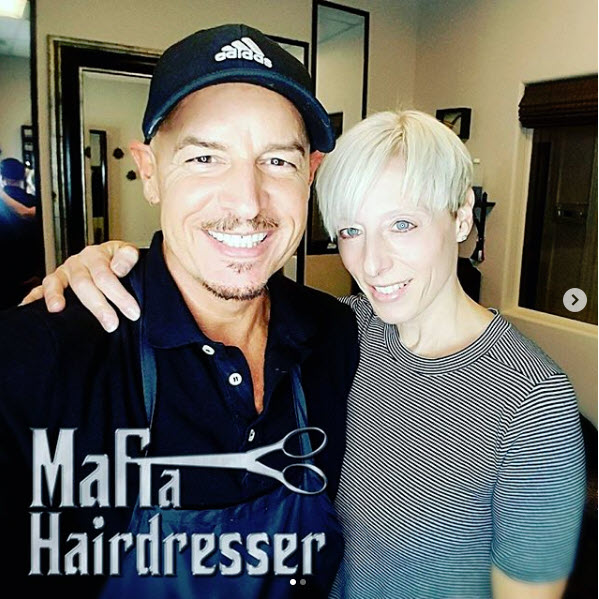
LISTEN: Jon-David’s outrageous serialIzed podcast of mobsters, Hollywood, hair salon life, rave culure, true crime, and unbelievable stories inspired by a life that rarely went according to plan.
Start listening to
THE MAFIA HAIRDRESSER CHRONICLES →


And Then There Was Carrie Fisher
I never met Carrie Fisher.
I want to make that clear because Hollywood stories have a way of becoming increasingly impressive every time they’re told.
But we were once at the same party.
And I watched her.
That was enough.
There was some sort of game happening around her. As I remember it, if Carrie made one of the men laugh, there was a penalty involving a drink or a line of cocaine.
It was Hollywood.
It was a different time.
What fascinated me wasn’t the party.
It was her brain.
Carrie Fisher could arrange ordinary words in an extraordinary order.
She was funny without seeming to stop everything and announce:
I AM NOW MAKING A JOKE.
She could sound casual, Southern Californian, occasionally Valley Girl-ish, self-deprecating and almost tossed-off while being ferociously intelligent underneath it.
Later, when I read Postcards from the Edge and her other writing, I recognized what I had seen at that party.
The voice was the intelligence.
She didn’t have to sound literary to prove she was smart.
That changed something for me.
Because I didn’t want to sound literary either.
I wanted to sound like me.
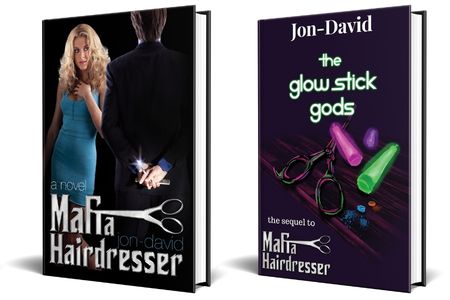
THE STORIES THAT STARTED IT ALL
Mafia Hairdresser, & The Glow Stick Gods – two outrageous novels of mobsters, Hollywood, celebrities, cocaine, “Tina”, rave culture, and survival. Inspired by Jon-David’s unbelievable life.
Discover the Books →

I Write Like a Hairdresser
It took me years to understand that this wasn’t a deficiency.
It was the asset.
I use hairdresser words.
I use slang.
I interrupt myself.
I occasionally take the scenic route to get to the point.
I use humor when something makes me uncomfortable.
Sometimes I use humor when something makes you uncomfortable.
And underneath all of that, I am constructing the story.
That’s the part people don’t necessarily see.
The casual voice is not the absence of craft.
The casual voice is the craft.
Carrie Fisher helped me understand that a writer could be extremely intelligent without writing as though she had swallowed a thesaurus.
I may have borrowed a little of that permission from her.
Then I filtered it through forty-five years behind a styling chair.
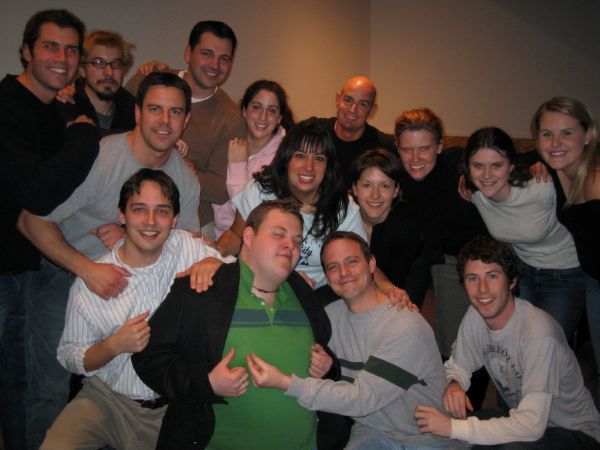
Jon-David did stand-up and studied writing at 2nd City in Toronto and Chicago.
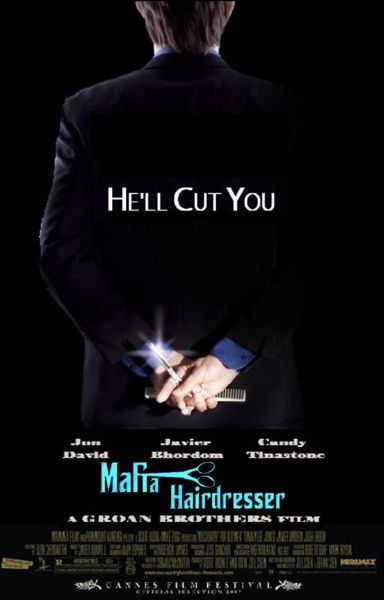
Hollywood Didn’t Know What to Do With My Gay Lead
Before Mafia Hairdresser became a book, it was a screenplay.
And I worked on it seriously.
I took meetings.
People liked it.
People told me it was funny.
People told me it was commercial.
Then came the notes.
Could the protagonist be a woman?
The problem wasn’t necessarily the story.
The problem was that my hero was gay.
This was an earlier Hollywood, and getting people comfortable with a gay male protagonist at the center of a mainstream movie was considerably harder than it would be today.
So I did what an aspiring screenwriter is trained to do.
I took the note.
I rewrote it.
I changed the character.
I tried to give them what they said they needed in order to make the movie.
And then?
They made something else.
Welcome to Hollywood.
That experience frustrated me enough that eventually I walked away from screenwriting.
For a while.




Connect with Us on Social Media





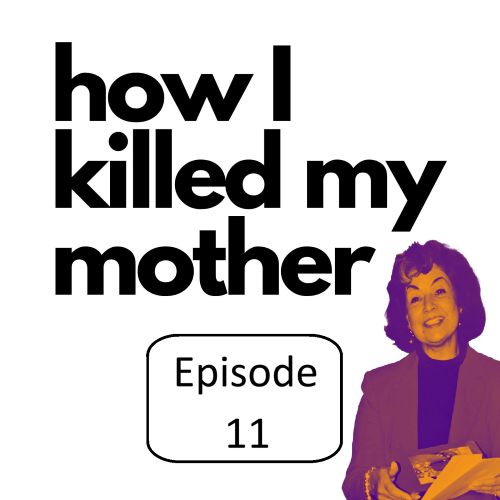
YES. IT’S REALLY CALLED
HOW I KILLED MY MOTHER
A funny, painful, and unexpectedly hopeful memoir podcast about mothers, sons, guilt, grief, forgiveness, and the unfinished relationships we carry with us – sometimes long after the people we love are gone.
LISTEN TO HOW I KILLED MY MOTHER→

Fine. I’ll Write a Book.
About ten years later, someone suggested something that changed the trajectory again.
Why didn’t I learn how to write a novel?
Learn.
There’s that word again.
So I did.
I went to workshops.
I studied fiction.
I learned the differences between writing something meant to be performed on a screen and writing something that had to create the entire movie inside a reader’s head.
I learned literary devices.
Structure.
Point of view.
Description.
Pacing.
And I turned my screenplay into my first novel.
Mafia Hairdresser.
Then something happened that nobody could really have planned.
Twitter.
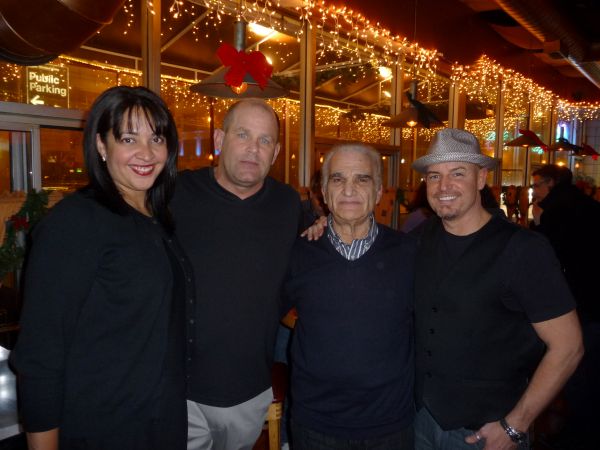
Jon-David’s book agent sent him on a book tour in Chicago with real Chicago mobster writers.
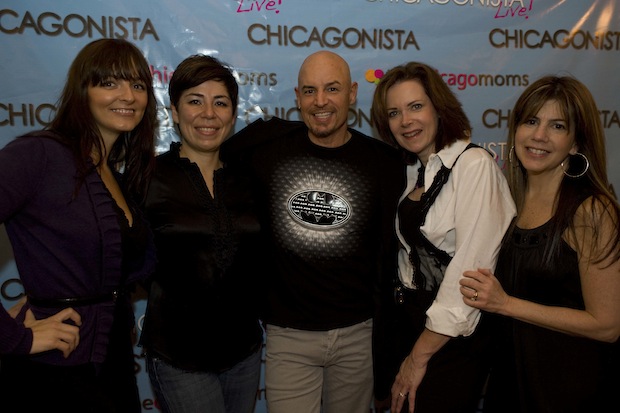
Jon-David, Social Media Divo!
I Accidentally Became an Early Social-Media Hairdresser
This was around 2009.
Twitter was still young enough that nobody entirely understood what it was going to become.
Including Twitter, probably.
And there I was:
A hairdresser.
Who had written a book.
About a hairdresser.
Who worked for the Mafia.
And I knew how to write short, funny observations.
Apparently, there wasn’t a great deal of competition in that particular category.
I became known online remarkably quickly.
People found the Mafia Hairdresser persona.
They found the book.
They found my stories.
And suddenly all these strange pieces of my life that had seemed completely unrelated started connecting.
The mob experience became a screenplay.
The screenplay taught me writing.
Hollywood rejection pushed me toward books.
The book led me to Twitter.
Twitter taught me about building an audience around a personality.
And now, all these years later, I’m doing it again.
Except there’s one important difference.

I’m Not Hiding Behind Mafia Hairdresser Anymore
This time, I’m not trying to invent a persona.
I’m not trying to turn myself into a brand character.
I’m not trying to figure out what somebody else wants the protagonist to be.
I’m Jon-David.
Hairdresser.
Writer.
Memoirist.
Podcaster.
Former accidental Mafia accessory.
Son.
Caregiver.
Gay man.
Sixty-something observer of a world that continues to provide me with entirely too much material.
The funny thing is that I spent decades learning how to write characters.
Now I’ve realized the most useful character I’ve ever had was myself.
That’s also why How I Killed My Mother feels different from the things I’ve written before.
There is nowhere left to hide.
Not behind fiction.
Not behind Mafia Hairdresser.
Not behind a screenplay.
Not behind a joke.
Although I’m keeping the jokes.
I’m not insane.
Yes, I Can Write
So when someone tells me now:
“Wow. You’re really a good writer.”
I say thank you.
Because it is a compliment.
But privately, I smile.
I’ve been studying stories for most of my adult life.
I’ve studied screenwriting.
I’ve studied fiction.
I’ve studied dialogue.
I’ve studied people.
And for forty-five years, I’ve had a front-row seat to human behavior while holding scissors two inches from people’s ears.
Carrie Fisher showed me that intelligence didn’t have to announce itself.
Hollywood taught me that rejection doesn’t necessarily mean the work is bad.
Writing Mafia Hairdresser taught me that the truth sometimes needs fiction before we’re brave enough to tell it.
And How I Killed My Mother taught me that eventually you have to stop hiding behind the character and put your own name on the story.
So yes.
The hairdresser can write.
He took classes.
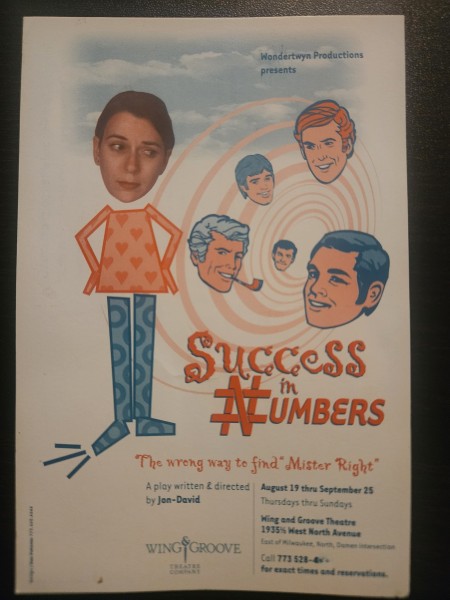
Jon-David wrote, produced and directed a play. Sold out every date!
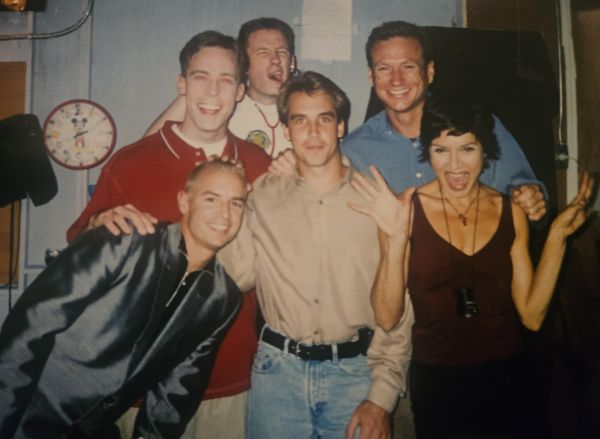
The Cast of Success in Numbers (SIN)
Jon-David is the author of Mafia Hairdresser and The Glow Stick Gods and the creator and host of the memoir podcast How I Killed My Mother. After forty-five years behind the chair, he is finally admitting that hairdressing may have been one very long course in character development.
More From How I Killed My Mother
How I Killed My Mother is my memoir podcast about family, forgiveness, identity, humor, grief, caregiving, spirituality and the uncomfortable discovery that our parents sometimes make more sense after we begin repeating their mistakes.
Listen to the podcast and join my mailing list at HowIKilledMyMother.com for new stories, bonus material and updates about the upcoming memoir.
And ask yourself:
What did you once hate about your parents—only to hear yourself saying or doing the exact same thing years later?
0 Comments