
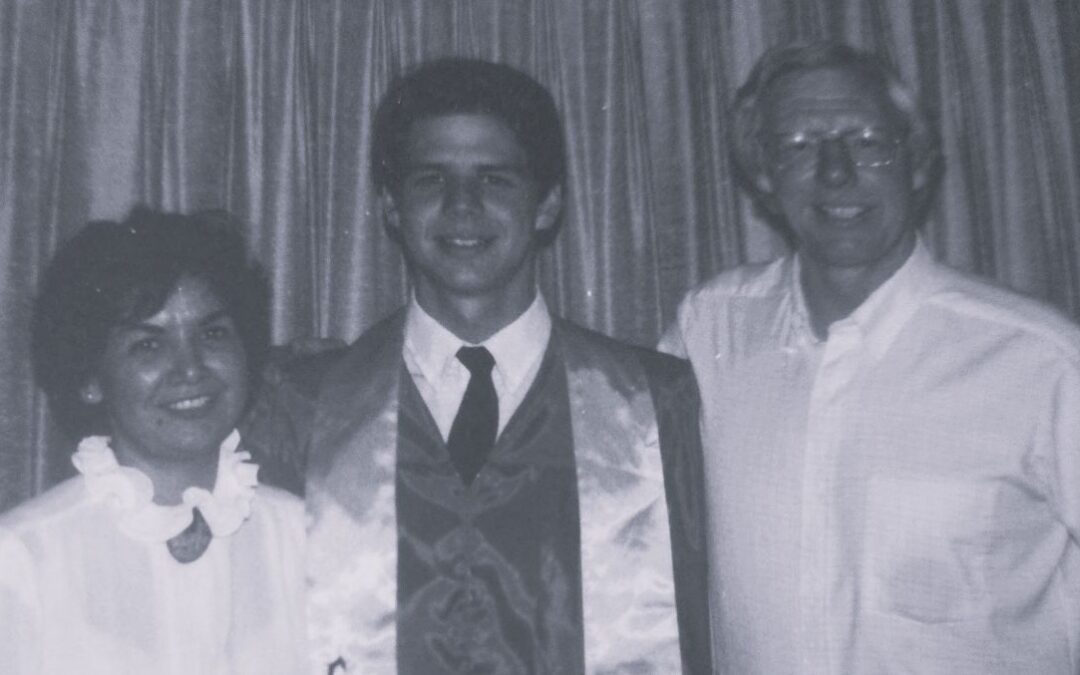
Suicide, Depression, Social Media, and Starting Over
What if the lowest point in your life became the beginning of your greatest personal transformation?
That question is really where How I Killed My Mother begins.
Not with my mother.
Not even with death.
It begins with depression.
It begins with social media.
And it begins with a period in my life when I finally understood something I had previously only been able to sympathize with: what it can feel like when a person simply doesn’t want to face another day.
I didn’t expect any of that when I started writing How I Killed My Mother. I thought I was writing stories about my mother, my family, and my strange little life.
Instead, I began writing my way out of one of the darkest periods of it.
I Was There at the Beginning of Social Media
In 2009, I published my novel Mafia Hairdresser and did what authors were beginning to be told they should do: I went online to promote it.
I joined Twitter.
Then Facebook.
And back then, social media felt almost innocent.
It was fun.
It was new.
It felt like an enormous cocktail party where suddenly you could talk to writers, actors, journalists, hairdressers, business owners, readers, celebrities, and complete strangers from all over the world.
And it worked.
I sold a lot of books on Twitter.
Then something unexpected happened.
I became Twitter famous.
There was a word floating around for people like us: “Twilebrities.” I remember believing that I had come up with the term myself, although enough years have passed that I’m certainly not going to claim the trademark. Somebody else may have been saying it at exactly the same time.
But I was one of them.
Today, we’d probably call us early social media influencers.
Back then, we were just figuring it out as we went along.
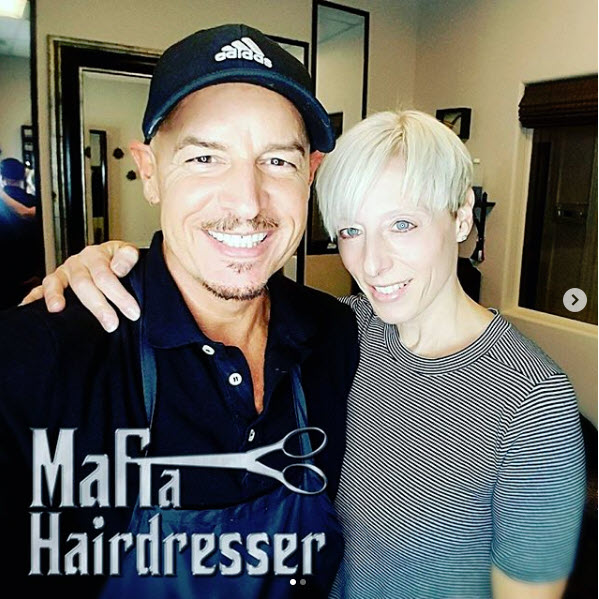
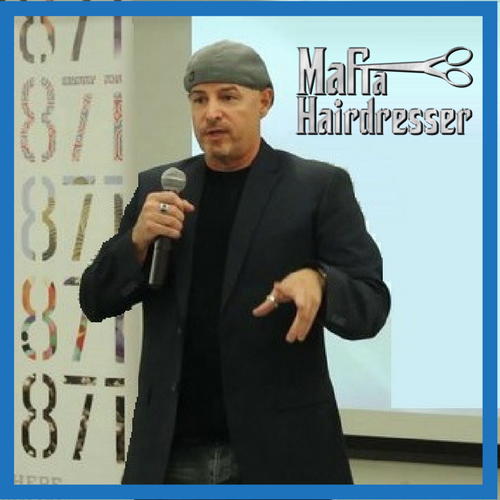
LISTEN: Jon-David’s outrageous serialIzed podcast of mobsters, Hollywood, hair salon life, rave culure, true crime, and unbelievable stories inspired by a life that rarely went according to plan.
Start listening to
THE MAFIA HAIRDRESSER CHRONICLES →

When Social Media Became a Business
My success promoting Mafia Hairdresser led me almost accidentally into social media consulting.
I began advising people in the salon and spa industry and eventually other businesses about Twitter, Facebook, online marketing, building an audience, and turning followers into customers.
It wasn’t really my passion.
I was a hairdresser and a writer.
But I had gotten good at this new thing, and suddenly businesses wanted to understand it.
When I spoke at conferences, I would often appear alongside people who understood the technical side of social media far better than I did. Some were involved in algorithms, technology, online behavior, and the systems that determined what people saw.
And I remember hearing warnings.
Social media was going to change.
The platforms would become better and better at learning what held our attention.
The technology would become increasingly difficult to resist.
Even the people who understood how these systems worked wouldn’t necessarily be immune to their pull.
At the time, I don’t think most of us understood exactly what that would mean.
Years later, I thought I did.
THE STORIES THAT STARTED IT ALL
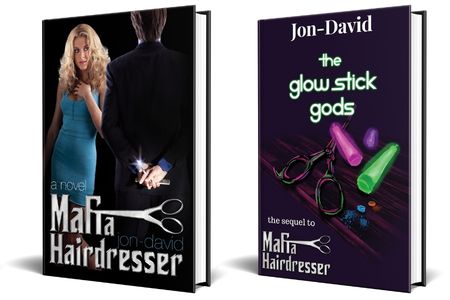
Mafia Hairdresser, & The Glow Stick Gods – two outrageous novels of mobsters, Hollywood, celebrities, cocaine, “Tina”, rave culture, and survival. Inspired by Jon-David’s unbelievable life.
Discover the Books →

By 2020, I Wanted Out
By around 2020, social media no longer felt like that wonderful worldwide cocktail party I’d joined in 2009.
Something had changed.
Or maybe everything had changed.
What once seemed to connect people now often appeared to divide them.
I watched people become consumed by their feeds. I watched arguments escalate. I watched people compare their actual lives to carefully edited versions of everybody else’s lives.
And I watched algorithms become extraordinarily good at giving people more of whatever kept them looking.
More outrage.
More fear.
More validation.
More beautiful people.
More successful people.
More people who agreed with you.
More people you could hate because they didn’t.
More, more, more.
Keep scrolling.
I began noticing something else, too.
People seemed miserable.
I saw depression. Loneliness. Anger. Addiction to the devices in our hands.
And eventually, I didn’t want to participate anymore.
So I largely dropped out.
This was an odd decision for someone who had once made money telling businesses how important social media was.
I still understood that businesses needed it. Authors needed it. Podcasters needed it. People selling almost anything needed some kind of online presence.
The irony isn’t lost on me that I’m now promoting How I Killed My Mother online.
But there’s a difference between using social media as a tool and allowing social media to use you.
It took me a long time to understand that difference.
Then My Own Life Fell Apart
Watching sadness in other people is one thing.
Experiencing a period when you begin to understand despair yourself is another.
I tell another part of my story in my podcast Jon-David & Goliath.
That story concerns my time working at The Boca Raton resort in Florida and the events that followed. I believed I had been badly wronged professionally, and I spent an enormous amount of emotional energy—and ultimately my savings—trying to fight back through the legal system.
Whatever anger I originally felt eventually became something else.
I became sad.
Deeply sad.
I felt defeated.
And for the first time in my life, I began to understand how someone could reach a point where the idea of facing another day could feel unbearable.
That frightened me.
But it also changed me.




Connect with Us on Social Media





YES. IT’S REALLY CALLED
HOW I KILLED MY MOTHER
A funny, painful, and unexpectedly hopeful memoir podcast about mothers, sons, guilt, grief, forgiveness, and the unfinished relationships we carry with us – sometimes long after the people we love are gone.
LISTEN TO HOW I KILLED MY MOTHER→
Understanding Suicidal Thoughts Differently
I don’t pretend that my experience explains anyone else’s depression or suicidal thoughts.
It doesn’t.
Every person’s circumstances are different.
But my own lowest period gave me an empathy I hadn’t possessed before.
When I saw people online talking about depression, loneliness, hopelessness, or suicide, I didn’t see those words in quite the same way anymore.
I understood the exhaustion behind them.
I understood how a person could become so overwhelmed by what was happening today that tomorrow didn’t seem particularly appealing.
And I began wondering about the role this machine in our hands was playing in all of it.
If you’re already lonely, what happens when an algorithm feeds you more reasons to feel excluded?
If you’re already frightened, what happens when you’re shown more things to fear?
If you’re already angry, what happens when anger keeps you engaged, so you’re continually served more of it?
If you already believe everybody else has a better life than you do, what happens when you spend hours looking at carefully manufactured evidence that seems to prove it?
I’m not suggesting that social media causes every case of depression or that deleting an app is a cure for mental illness.
Life isn’t that simple.
I am saying that I had to ask myself a question:
Was this helping me live my life—or keeping me from living it?
Why Suicide Opens How I Killed My Mother
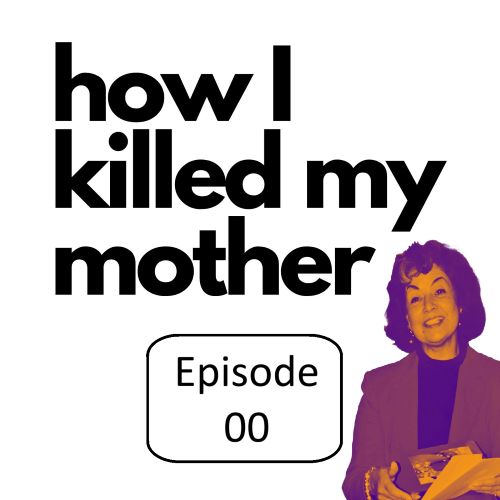
That’s why the first episode of How I Killed My Mother begins where it does.
The subject of suicide isn’t there for shock value.
It’s there because I needed listeners to understand where I was emotionally before I could tell them where this story eventually took me.
Because How I Killed My Mother isn’t really a story about death.
It’s a story about starting over.
It’s about forgiveness.
It’s about family.
It’s about the complicated relationship between a mother and a son.
It’s about spirituality, including experiences I can’t necessarily explain.
It’s about the people we love while they’re alive—and the strange ways some of us continue to feel their presence after they’re gone.
And it’s about discovering that sometimes the people who help pull us through the worst periods of our lives aren’t necessarily sitting beside us.
Some of mine were dead.
That’s where this story gets interesting.
Writing Became a Way Back
I started writing about my mother because I had stories to tell.
Funny stories.
Painful stories.
Ridiculous stories.
Stories about things she did to me.
Stories about things I blamed her for.
And eventually, stories about things I had done to her.
But something happened as I wrote them down.
My perspective began changing.
Writing forced me to examine memories instead of merely repeating the version of them I had carried around for years.
I began asking questions.
What if my mother wasn’t always wrong?
What if I wasn’t always right?
What if forgiveness wasn’t something I needed to give her?
What if I needed some of it myself?
And what if the worst period of my life wasn’t the end of my story?
What if it was the chapter that forced me to begin another one?
That became How I Killed My Mother—first as a memoir podcast and now as an upcoming book.
Maybe Starting Over Means Turning Something Off
I am not going to tell you to delete Facebook.
I’m not going to tell you to throw away your phone.
I’m certainly not going to tell you to stop using the internet, because you’re reading this on a website.
But I will tell you what I learned.
Pay attention to how you feel after you’ve been online.
Pay attention to what makes you angry.
Pay attention to what makes you afraid.
Pay attention to how often you compare yourself to strangers.
Pay attention to whether you’re consuming information because you chose it—or because something chose it for you.
And every once in a while, turn the damn thing off.
Go outside.
Call somebody.
Write something.
Make something.
Talk to someone you love.
Talk to someone who loves you.
And if you’re fortunate enough to believe that love can somehow survive death, maybe talk to one of those people, too.
You might be surprised by what happens.
I was.
Listen to How I Killed My Mother
How I Killed My Mother is a memoir podcast about mothers and sons, depression and hope, family and forgiveness, caregiving, spirituality, humor, death, and the uncomfortable business of discovering who we really are.
The podcast also became the foundation for my upcoming memoir, How I Killed My Mother.
This isn’t a story about having all the answers.
It’s about what happened when I finally started asking myself the questions.
If you’re standing at the bottom of something right now, I can’t tell you how long your climb will be.
I can only tell you that I’ve stood at the bottom, too.
Climb with me.
— Jon-David
0 Comments