
I don’t consider myself psychic. I don’t think I have special powers. But over the years, I’ve become much better at noticing the things I used to dismiss.

How to Notice Signs From Loved Ones Who Have Died
I have been around psychics.
Mediums.
Intuitive people.
Spiritual people.
People who say they can communicate with the dead.
Some of them I believe.
Some of them I don’t.
That’s probably healthy.
But I have noticed that many people who work seriously in that world say some version of the same thing:
Pay attention.
Become more receptive.
Notice patterns.
Notice feelings.
Notice dreams.
Notice the thing that happens twice.
Notice what appears immediately after you ask a question.
And over time, I’ve begun to believe something else.
You may not need a psychic or medium at all.
I Don’t Think I’m Psychic
Let me say that first.
I don’t walk into a room and see dead relatives standing behind everyone.
I don’t know tomorrow’s lottery numbers.
I can’t tell you what your grandmother wants you to know.
I don’t have a crystal ball.
I don’t own enough scarves.
But I do think I have become more intuitive.
And more importantly, I think I’ve become more willing to notice intuition when it arrives.
That’s different.
LISTEN: Jon-David’s outrageous serialIzed podcast of mobsters, Hollywood, hair salon life, rave culure, true crime, and unbelievable stories inspired by a life that rarely went according to plan.
Start listening to
THE MAFIA HAIRDRESSER CHRONICLES →

I Used to Dismiss Things
A feeling.
A dream.
A coincidence.
A song at the right moment.
A butterfly.
A name on a sign.
A stranger who looks uncannily like someone you’re thinking about.
Most of us are trained to immediately explain those things away.
Coincidence.
Memory.
Randomness.
Pattern recognition.
And sometimes they probably are.
But I no longer feel any need to choose only one explanation.
Something can be coincidence and meaningful.
A butterfly can simply be a butterfly.
And I can still say:
“Hi, Mom.”

THE STORIES THAT STARTED IT ALL
Mafia Hairdresser, & The Glow Stick Gods – two outrageous novels of mobsters, Hollywood, celebrities, cocaine, “Tina”, rave culture, and survival. Inspired by Jon-David’s unbelievable life.
Discover the Books →

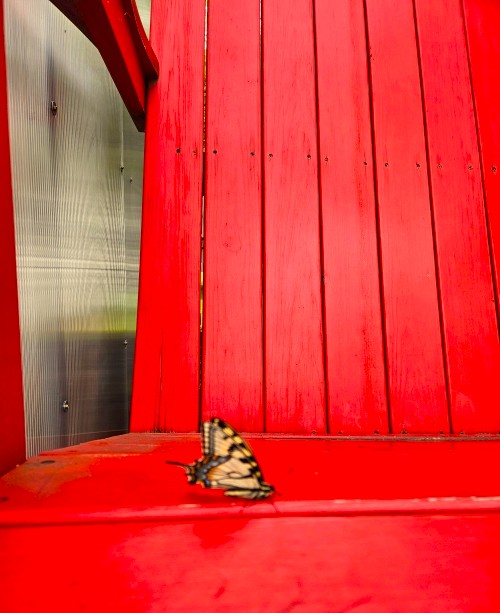
My Mother Uses Yellow Butterflies
At least that’s how I interpret it.
After my mother died, I began seeing yellow butterflies at moments when I felt especially connected to her.
Once, my father, brother and I spent a day floating down the Sacramento River.
It was one of those beautiful family days that becomes more valuable only after you realize how few of them you’ll ever have.
My mother had already died.
But I felt her there.
I didn’t say anything at first.
My brother wasn’t particularly interested in my woo-woo at that point in his life.
Then, toward the end of the trip, I looked at him and said:
“Yellow butterfly.”
Almost immediately, a yellow butterfly landed between us on the hood of my father’s car.
My brother froze.
I smiled.
Because by then, this sort of thing wasn’t entirely new to me.
The chapter describes that exact moment and how, for me, the butterfly felt like confirmation that Mom had been with the three of us throughout that day.
Did I control the butterfly?
Of course not.
Do I believe my mother arranged it?
Maybe.
Do I care if you don’t?
Not particularly.
I Developed Something I Call Prayer-Texting
This is not a scientific term.
Obviously.
If it were scientific, I would have invented a better name.
Prayer-texting is simply what I do when I experience something that feels like a sign.
I ask. In my mind. In my heart.
“Mom, was that you?”
Then I pay attention to what happens next.
Sometimes nothing happens.
Fine.
Sometimes something weirdly specific happens.
A name.
A song.
A phrase.
A memory.
Something that has personal meaning and would mean absolutely nothing to someone else.
That’s important.
Because I don’t think signs have to be universal.
They only have to make sense to the two people involved.




Connect with Us on Social Media





YES. IT’S REALLY CALLED
HOW I KILLED MY MOTHER
A funny, painful, and unexpectedly hopeful memoir podcast about mothers, sons, guilt, grief, forgiveness, and the unfinished relationships we carry with us – sometimes long after the people we love are gone.
LISTEN TO HOW I KILLED MY MOTHER→

Maybe That’s the Skill
Not mediumship.
Not clairvoyance.
Recognition.
If somebody you loved used to call you “kiddo,” and you ask for a sign and then hear that exact word three times that day, maybe it means something to you.
If your grandmother loved cardinals, maybe a cardinal catches your attention.
If your father always played one specific song, maybe that song suddenly matters when it appears.
You don’t need someone else to validate every experience.
In fact, sometimes the point is that you already know why it matters.
The Relationship Gives You the Language
That’s why I think people often underestimate their own ability to feel connected to someone they’ve lost.
You knew them.
You know the private jokes.
The songs.
The food.
The phrases.
The places.
The habits.
The symbols.
A stranger may be intuitive.
But they don’t necessarily know your private language with the person who died.
You do.
That matters.
I Think Grief Can Make Us More Receptive
Not because grief gives you supernatural powers.
Because grief changes attention.
When somebody dies, the world suddenly becomes full of reminders.
Their favorite restaurant.
Their perfume.
Their handwriting.
Their birthday.
A phrase they used.
Places you went together.
You become extraordinarily alert to the absence of that person.
Perhaps that same heightened attention also makes you more receptive to experiences you might previously have ignored.
That doesn’t make the experience fake.
It makes you attentive.
And attention is a skill.
You Can Practice Paying Attention
This is where I probably agree with some psychics and mediums.
Receptivity can be practiced.
Sit quietly.
Ask a question.
Then stop demanding an answer.
Notice dreams.
Write things down.
Notice repeated symbols.
Notice what feels emotionally different from an ordinary coincidence.
And perhaps most importantly:
Don’t force it.
If you spend every day desperately demanding that your dead husband send you a blue jay at 3:17 PM, you may simply make yourself miserable.
This shouldn’t become another chore.
Or a test of whether someone loved you enough to send proof.
That’s not what I mean.
You Don’t Need to Turn Every Coincidence Into a Message
This matters too.
I don’t think everything is a sign.
If I thought every bird was my mother, Mom would be exhausting.
Sometimes a commercial is a commercial.
Sometimes the song came on because Spotify’s algorithm knows exactly how old you are.
Sometimes the number 11:11 is simply the time.
Discernment is part of intuition.
The question I ask isn’t:
Can I make this into a sign?
It’s:
Did this feel different?
And if it didn’t?
Let it go.

I Also Don’t Think You Need an Intermediary Forever
I have respect for people who genuinely believe they have mediumistic abilities.
A good medium may help someone open up to possibilities they had previously dismissed.
They may help a grieving person feel less alone.
They may give someone permission to trust their own intuition.
But I would hope the end result isn’t dependency.
I don’t think the goal should be:
I can’t communicate with someone I love unless I pay somebody else to do it for me.
I think the more empowering idea is:
Maybe I can learn to listen for myself.
People We Love Already Taught Us How to Hear Them
This is part of what I’m beginning to believe.
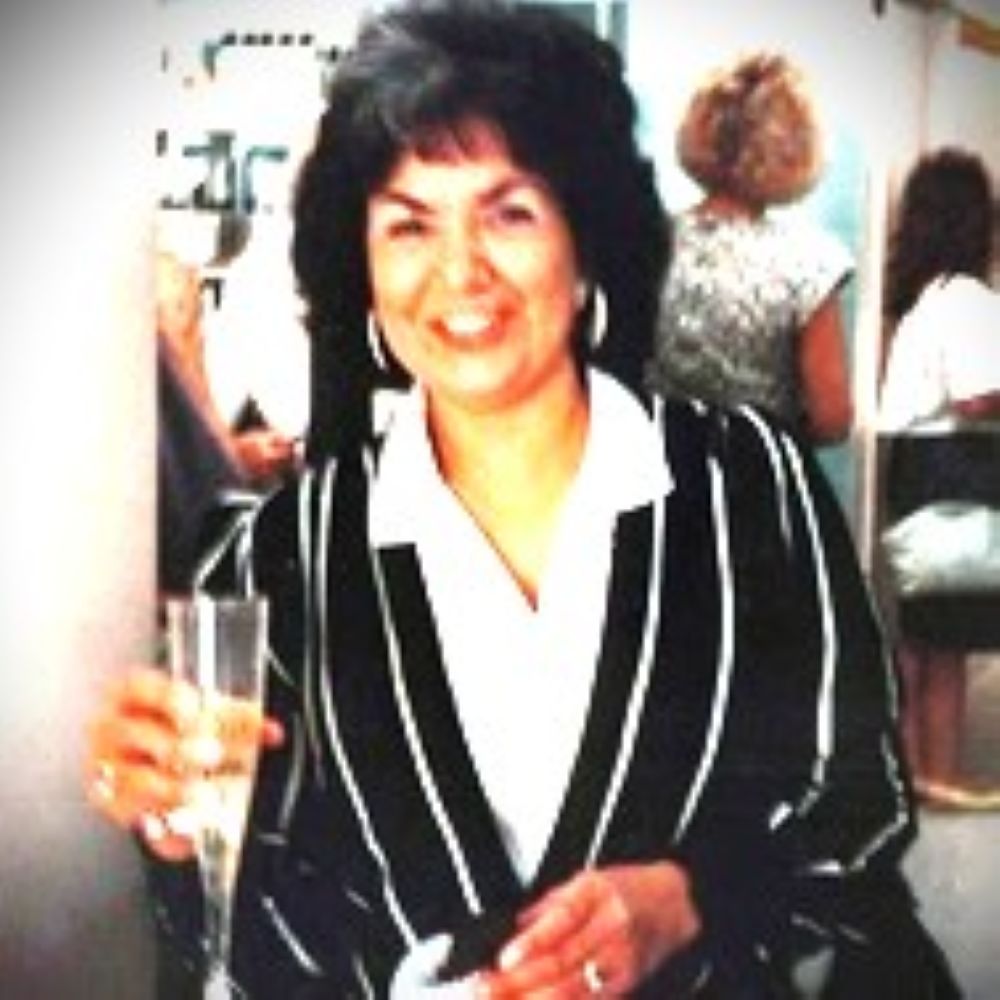
My mother taught me her language while she was alive.
Not intentionally.
Just through decades of being Marie.
Dennis taught me what encouragement from Dennis felt like.
Liz taught me what sharp digital intelligence sounded like.
Jean taught me her own way of showing up.
So when I sense those people around certain parts of my life, maybe I am receiving something from them.
Maybe I am drawing on what they left inside me.
Maybe both are true.
I don’t need to solve that.
The Most Important Part Is What the Connection Does to You
Does it make you kinder?
Calmer?
Braver?
More loving?
More willing to continue?
More willing to create?
More able to forgive?
More able to miss someone without being destroyed by missing them?
Then the connection has value.
That’s enough for me.
Start With Someone You Loved
If you’re curious, you don’t have to begin dramatically.
Don’t light twelve candles.
Don’t buy crystals unless you like crystals.
Don’t book a séance.
Just sit somewhere quiet.
Think of the person.
Say their name.
Remember how they made you feel.
Then ask something simple:
“If you’re around, help me notice you.”
And then continue living your life.
Go to work.
Walk the dog.
Make dinner.
Drive somewhere.
Pay attention.
Maybe nothing happens.
Maybe something does.
Maybe you’re talking to memory.
Maybe you’re talking to consciousness.
Maybe you’re talking across whatever boundary separates this life from whatever comes next.
I don’t know.
But I have learned not to underestimate love simply because a body disappeared.
My mother has been dead for years.
I still talk to her.
And sometimes, when I shut up long enough,
I think I hear her back.
This Isn’t the Place for Me to Teach the Whole Practice
I have stories.
Many.
Dreams.
Signs.
Odd coincidences.
Moments that convinced me.
Moments that probably wouldn’t convince you.
And that’s okay.
I may write more about how I’ve developed this intuition later.
I’m sure it will come up in future work.
But How I Killed My Mother isn’t supposed to become a handbook for talking to dead people.
It’s a story about my mother and me.
The spirituality is part of that relationship.
Not the product.
Listen to How I Killed My Mother
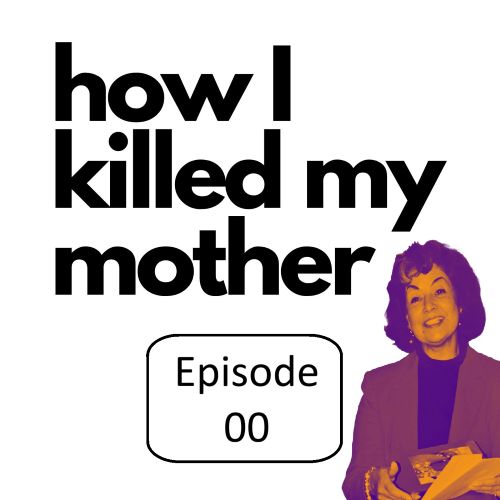
How I Killed My Mother is a memoir podcast about mothers and sons, depression and hope, family and forgiveness, caregiving, spirituality, humor, death, and the uncomfortable business of discovering who we really are.
The podcast also became the foundation for my upcoming memoir, How I Killed My Mother.
This isn’t a story about having all the answers.
It’s about what happened when I finally started asking myself the questions.
If you’re standing at the bottom of something right now, I can’t tell you how long your climb will be.
I can only tell you that I’ve stood at the bottom, too.
Climb with me.
— Jon-David
0 Comments