
One of the cruelest tricks grief plays on caregivers is convincing us that because we understand something now, we should have understood it then.

Caregiver Guilt: Why We Think We Should Have Known
There is a particular sentence grieving people seem to love torturing themselves with.
I should have known.
I should have noticed.
I should have asked another question.
I should have called sooner.
I should have insisted.
I should have recognized the symptom.
I should have ignored the doctor.
I should have trusted the doctor.
I should have done something differently.
That sentence can keep a person busy for years.
I know.
Hairdressers Hear Everything
Long before my mother’s final illness, I had already heard of something called ileus.
Not in medical school.
Obviously.
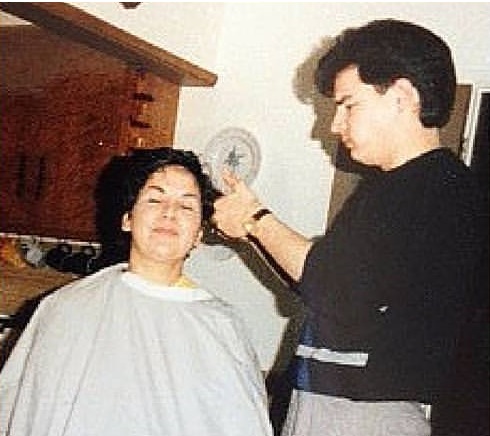
I was a hairdresser.
But after decades behind a styling chair, you hear an astonishing number of stories.
Births.
Deaths.
Cancer.
Heart attacks.
Divorces.
Surgeries.
Hospital mistakes.
Miraculous recoveries.
Not-so-miraculous recoveries.
People tell their hairdresser things they don’t tell anybody else.
By the time my mother became ill, I’d spent decades listening to clients describe medical experiences involving themselves, spouses, parents, children and friends.
Somewhere in all of those stories, I had heard about postoperative ileus.
I knew, in a general and non-medical way, that sometimes the digestive system can slow down or temporarily stop functioning properly after surgery.
I’d even heard frightening stories about complications.
So later, when my mother’s medical crisis unfolded, another sentence began haunting me:
You knew about this.
LISTEN: Jon-David’s outrageous serialIzed podcast of mobsters, Hollywood, hair salon life, rave culure, true crime, and unbelievable stories inspired by a life that rarely went according to plan.
Start listening to
THE MAFIA HAIRDRESSER CHRONICLES →

Except I Didn’t Know It Was Happening to Her
That’s the distinction grief does not like.
Knowledge in general is not the same as recognizing a medical condition in real time.
Especially when the patient is your mother.
Especially when you’ve been given instructions by medical professionals.
Especially when you’re exhausted.
Especially when the symptoms you’re observing could have more than one explanation.
Especially when you are not, in fact, a doctor.
But hindsight doesn’t care about any of that.
Hindsight takes information acquired before, during and after an event, mixes it into one big bowl, and then hands the finished product back to you as though you had possessed all of it from the beginning.
You didn’t.
But hindsight says you did.

THE STORIES THAT STARTED IT ALL
Mafia Hairdresser, & The Glow Stick Gods – two outrageous novels of mobsters, Hollywood, celebrities, cocaine, “Tina”, rave culture, and survival. Inspired by Jon-David’s unbelievable life.
Discover the Books →

The Dangerous Magic of Knowing the Ending
Imagine watching a mystery movie for the second time.
Suddenly every clue is obvious.
Of course that person was lying.
Of course that door mattered.
Of course that sentence was foreshadowing.
How could you have missed it?
Because the first time you watched it, you didn’t know the ending.
Caregiving can work the same way.
After something goes terribly wrong, every earlier moment seems illuminated by what happened later.
That stomach pain?
A clue.
That complaint?
A clue.
That hesitation?
A clue.
That odd symptom?
A clue.
Except at the time, those things were simply moments happening in sequence.
Nobody had placed ominous music underneath them.

I Thought I Was Doing What I Was Supposed to Do
This is where caregiver guilt gets complicated.
When someone you love is recovering from surgery or illness, you want instructions.
Tell me what to do.
Tell me what she should eat.
Tell me what medication she should take.
Tell me when she should sleep.
Tell me what is normal.
Tell me what means something is wrong.
You want a checklist because a checklist gives you something to control.
And I love controlling things.
Ask anyone who has ever dated me.
When my mother came home from the hospital, I thought my job was to help her recover.
That sounds obvious because it was obvious.
I wasn’t trying to hurt her.
I was trying to take care of her.
That’s precisely why later guilt became so complicated.




Connect with Us on Social Media





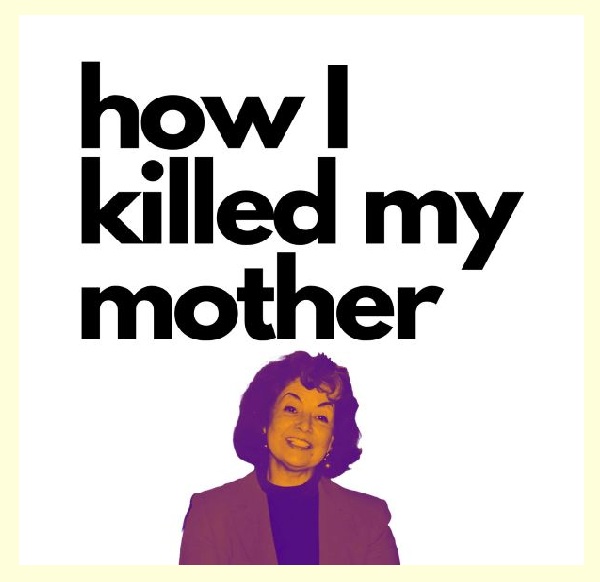
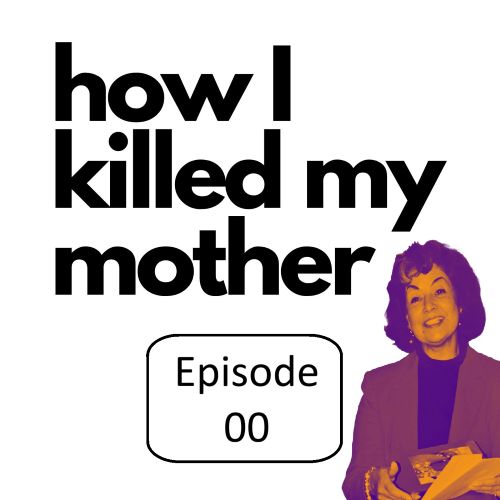
YES. IT’S REALLY CALLED
HOW I KILLED MY MOTHER
A funny, painful, and unexpectedly hopeful memoir podcast about mothers, sons, guilt, grief, forgiveness, and the unfinished relationships we carry with us – sometimes long after the people we love are gone.
LISTEN TO HOW I KILLED MY MOTHER→

Caregiving Gives You Responsibility Without Omniscience
I think that’s one of the cruel bargains of caregiving.
You are given enormous responsibility.
But you are not given enormous knowledge.
You’re expected to notice changes.
Remember medications.
Listen to doctors.
Watch symptoms.
Feed people.
Help them walk.
Make appointments.
Advocate.
Call family members.
Interpret moods.
Figure out when “I’m fine” means I’m fine and when it means something is very wrong.
And you are doing all of that while frightened.
Sometimes sleep-deprived.
Sometimes grieving before the person has even died.
Then if the outcome is terrible, you replay every decision.
As though a good caregiver should have possessed supernatural powers.

The Question Changes From “What Happened?” to “What Did I Do?”
That question can become poisonous.
There’s a difference between learning from what happened and putting yourself on trial.
Learning says:
What do I understand now that I didn’t understand then?
Guilt says:
Why weren’t you smart enough to know everything?
Those are not the same question.
One can help you.
The other can destroy you.
The Hairdresser in Me Made It Worse
The irony is that I had spent years hearing other people’s stories.
Thousands upon thousands of them.
That gave me a kind of strange layperson’s library of human experience.
So when something medical happened, I would occasionally think:
I’ve heard about this before.
Sometimes that kind of knowledge is useful.
But it can also make you overestimate what you should have been able to recognize.
Hearing about someone else’s condition while standing behind a styling chair does not make you qualified to diagnose your mother’s postoperative complication.
I understand that intellectually.
Emotionally took longer.
“I Should Have Known” Usually Means “I Wish I Could Change the Ending”
That’s what I think is hiding underneath the sentence.
I should have known.
Often really means:
I wish what happened hadn’t happened.
I wish I’d had some magical piece of information that would have changed everything.
I wish there had been a fork in the road where I could have chosen the other direction.
I wish I could go back.
But grief doesn’t give us a time machine.
So we invent one.
It’s called guilt.
We travel backward over and over, changing decisions in our minds and imagining better endings.
It feels like problem solving.
It isn’t.
The problem has already happened.
I Am Careful About the Medical Story Now
There’s another reason I want to write about this carefully.
Medical stories become simplified very easily.
Something complicated happens.
Years pass.
We tell the story again and again.
And eventually:
A caused B.
B caused C.
Somebody should have known.
Somebody should have prevented it.
Real medicine is often much messier than that.
My memoir records what I understood and believed during my mother’s postoperative crisis, including my recollection that I’d previously heard about ileus through clients and later tormented myself because I hadn’t recognized a similar possibility in my own mother’s condition.
That’s my experience.
It isn’t a medical textbook.
And I don’t want my personal guilt to masquerade as medical certainty.
This Is One Reason I Want to Do Saving the Father
When I begin my next podcast project, Saving the Father, I want to expand this conversation.
That story will include my experience caring for my father.
But unlike How I Killed My Mother, I want parts of Saving the Father to include other voices.
Caregivers.
People who have cared for aging parents.
People who made medical decisions for someone they loved.
And qualified professionals who can explain what family caregivers realistically can—and cannot—be expected to know.
Because I suspect there are an enormous number of us walking around with an invisible conviction:
I failed someone I loved.
And some of those people may not have failed at all.
They were simply human beings trying to navigate circumstances for which no one had adequately prepared them.
Caregivers Are Not Doctors With Worse Parking
That’s a line I wish more people understood.
A caregiver may become astonishingly knowledgeable.
You learn medication names.
Lab numbers.
Symptoms.
Insurance terminology.
Hospital routines.
You may become more familiar with someone’s day-to-day condition than anyone else.
But you are still not omniscient.
You don’t suddenly acquire a medical degree because someone you love gets sick.
And even medical professionals don’t always know how a situation will unfold.
Why did I expect more from myself?
Love.
That’s probably the answer.
Love creates the illusion that we should somehow know.

Sometimes the Person Closest to the Patient Sees the Least Clearly
There’s another paradox.
Being close can make you perceptive.
You notice something is off because you’ve known the person forever.
But being close can also make objectivity almost impossible.
This isn’t a patient.
It’s Mom.
It’s Dad.
It’s your husband.
Your wife.
Your child.
Someone whose suffering triggers every fear you have.
We’re often expected to make rational decisions at precisely the moment we’re least emotionally capable of feeling rational.
And then years later, calm Older You judges terrified Younger You.
I’ve done plenty of that.
I’m trying to stop.
What I Wish I Had Told Myself
If I could sit beside the version of myself taking care of my mother, I wouldn’t give him a diagnosis.
I wouldn’t give him medical instructions.
I wouldn’t tell him the ending.
I’d say:
Pay attention.
Ask questions.
Call when you’re worried.
Don’t be afraid to ask the same question twice.
Write things down.
Listen to your instincts, but don’t assume instinct makes you a medical professional.
And understand that doing your best does not guarantee the outcome you desperately want.
That’s the part caregivers don’t hear enough.
Sometimes you do everything you know to do.
And something terrible still happens.

Hindsight Is Not Evidence of Guilt
Today, I know more than I knew then.
Of course I do.
I have the ending.
I have years of reflection.
I have the original writing I did while events were unfolding.
I have conversations I’ve had since.
I have the perspective of age.
I have everything Younger Jon-David didn’t have.
It would be profoundly unfair to hand him everything I’ve learned afterward and then convict him for not knowing it beforehand.
Yet that is exactly what I did for years.
Maybe some of you are doing it too.
Someone you loved got sick.
Something happened.
You missed something.
Or you think you did.
And you’ve been standing in the courtroom of your own mind ever since, announcing:
I should have known.
Maybe.
But maybe the more accurate sentence is:
I wish I had known.
Those are very different things.
One accuses.
The other grieves.
I’m learning to choose the second one.
Listen to How I Killed My Mother
How I Killed My Mother is a memoir podcast about mothers and sons, depression and hope, family and forgiveness, caregiving, spirituality, humor, death, and the uncomfortable business of discovering who we really are.
The podcast also became the foundation for my upcoming memoir, How I Killed My Mother.
This isn’t a story about having all the answers.
It’s about what happened when I finally started asking myself the questions.
If you’re standing at the bottom of something right now, I can’t tell you how long your climb will be.
I can only tell you that I’ve stood at the bottom, too.
Climb with me.
— Jon-David
0 Comments