
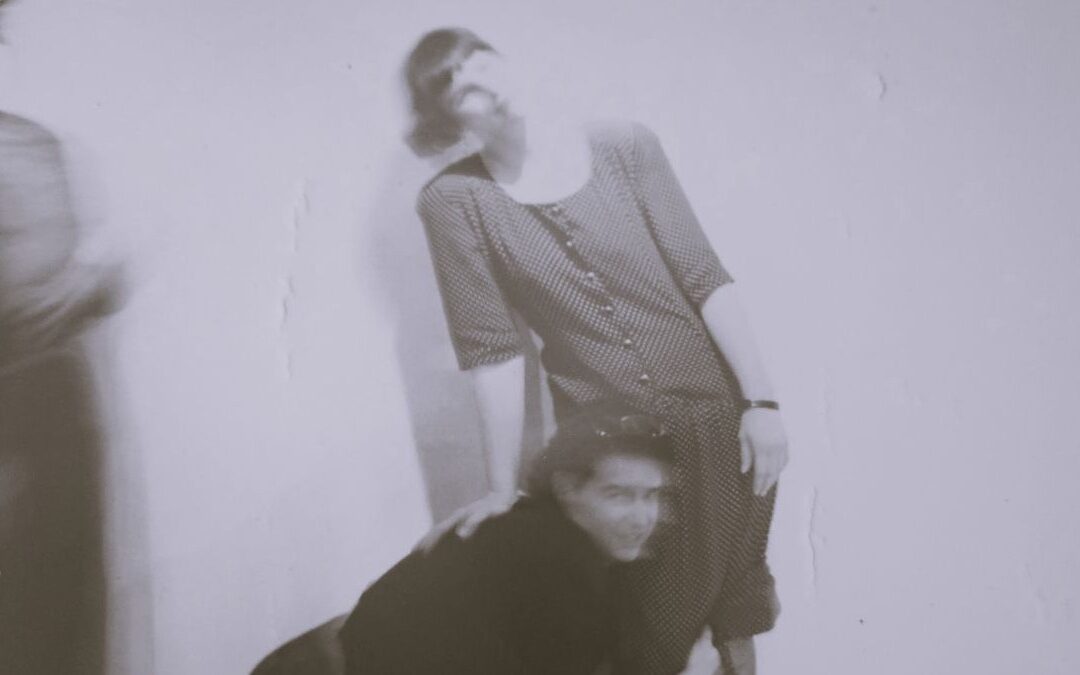
What happens when the child your parents believe they’re raising isn’t exactly the person you’re becoming?
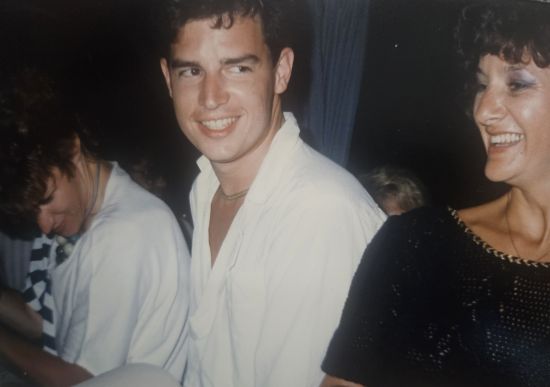
Did Our Parents Love Us—or the Person They Thought We Were?
My mother loved me.
Let’s get that out of the way immediately.
I knew she loved me when I was a child. I knew she loved me when I was a teenager. And despite everything that happened between us later, I knew she loved me when she died.
But while writing How I Killed My Mother, I’ve found myself asking a more uncomfortable question:
Did my mother love me—or did she sometimes love the person she thought I was?
And before anyone starts blaming my mother, there’s another question we probably need to ask.
Did I ever give her a fair chance to know the difference?
Parents Start Imagining Us Before We Can Imagine Ourselves
Parents are strange.
They meet this tiny human being who can’t hold up his own head, and within a remarkably short period of time they begin imagining his future.
What he’ll be like.
What he’ll do.
Who he’ll marry.
Whether he’ll have children.
What kind of man he’ll become.
My mother certainly had a vision for me.
I would grow up.
I’d become a successful man.
I’d marry a woman.
We’d have children.
And, presumably, one or more of those children would be absolutely horrible so I could finally understand what I’d put my mother through.
She was particularly excited about that part.
My mother had a plan.
Unfortunately, she neglected to consult the gay child involved.
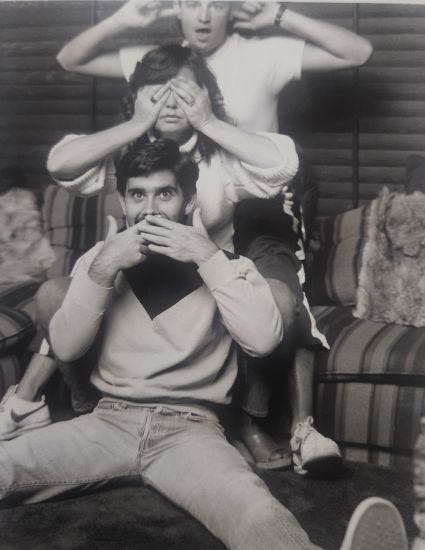

LISTEN: Jon-David’s outrageous serialIzed podcast of mobsters, Hollywood, hair salon life, rave culure, true crime, and unbelievable stories inspired by a life that rarely went according to plan.
Start listening to
THE MAFIA HAIRDRESSER CHRONICLES →

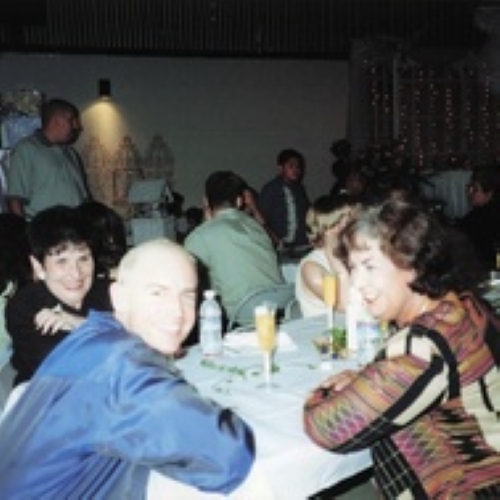
For a While, I Gave Mom Exactly What She Wanted
Here’s what makes my story more complicated.
When I entered high school, I didn’t look like a kid who was struggling with his sexuality.
Quite the opposite.
I looked like a girl magnet.
That was intentional.
I’d reinvented myself.
The braces were gone. I had great hair. I’d become more outgoing. I got involved in school. I had a job, money and eventually a muscle car.
And I dated girls.
Lots of them.
From my mother’s perspective, her vision of my future wasn’t falling apart.
It was coming true right in front of her.
Her son was handsome.
Confident.
Popular.
Dating girls.
A gentleman.
Future husband material.
Mom could relax.
She thought she knew exactly who I was becoming.
And here’s the part that’s difficult for me to admit:
I liked that she thought that.

THE STORIES THAT STARTED IT ALL
Mafia Hairdresser, & The Glow Stick Gods – two outrageous novels of mobsters, Hollywood, celebrities, cocaine, “Tina”, rave culture, and survival. Inspired by Jon-David’s unbelievable life.
Discover the Books →

Sometimes We Become the Person Who Makes Our Parents Comfortable
I wasn’t simply hiding.
I was performing.
There’s a difference.
Hiding means keeping something private.
Performing means actively giving people something else to believe.
And I was very good at performing.
I understood that the version of me my mother saw made her happy.
It made our relationship easier.
It allowed us to remain close without confronting something I wasn’t ready to confront either.
So I let her believe.
Maybe you’ve done this too.
Maybe not about sexuality.
Maybe you chose the career your father admired.
Maybe you stayed in a marriage longer than you should have because your family loved your spouse.
Maybe you went to church because it pleased your parents even after your beliefs changed.
Maybe you pretended to be happier than you were.
Maybe you wanted children because everybody assumed you would.
Maybe you didn’t want children and were afraid to say so.
Maybe you became successful because achievement was the easiest way to receive approval in your family.
Children become extraordinarily good at discovering which versions of themselves make their parents smile.
And then some of us become adults who keep performing long after we’ve left home.

But Is That the Parent’s Fault?
That’s where this gets uncomfortable.
It’s easy for an adult child to say:
“My mother didn’t know the real me.”
Okay.
But did I show her the real me?
Not entirely.
My mother was operating with the information I gave her.
And I was controlling the information.
That’s one of the things writing a memoir has forced me to confront.
For years, I could remember what my mother believed about me and feel frustrated that she didn’t understand.
But how could she completely understand something I was deliberately preventing her from seeing?
That doesn’t erase her responsibility for how she reacted when truths eventually emerged.
Parents are responsible for what they do with the truth once their children give it to them.
But children—especially frightened, ambitious, confused or approval-seeking children—sometimes spend years carefully managing what truths their parents receive.
Both things can be true.
That’s the annoying thing about growing up.
Eventually, everybody gets some responsibility.




Connect with Us on Social Media





YES. IT’S REALLY CALLED
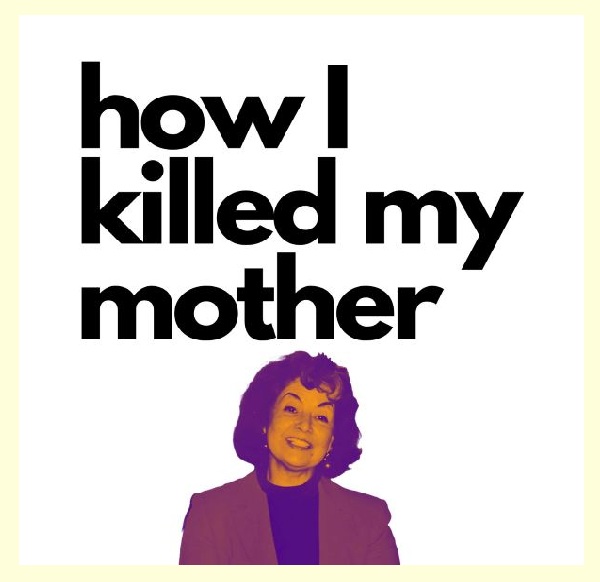
HOW I KILLED MY MOTHER
A funny, painful, and unexpectedly hopeful memoir podcast about mothers, sons, guilt, grief, forgiveness, and the unfinished relationships we carry with us – sometimes long after the people we love are gone.
LISTEN TO HOW I KILLED MY MOTHER→

Maybe Parents Don’t Love an Illusion. Maybe They Love a Possibility.
I’ve softened toward my mother’s dreams for me.
When I was younger, I could interpret them as expectations.
Now I see something else.
Hope.
She wasn’t sitting around plotting how to prevent me from becoming myself.
She was imagining happiness for me using the only blueprint she understood.
Marriage.
Family.
Children.
Success.
Security.
Love.
Her mistake wasn’t necessarily wanting those things for me.
Her mistake was assuming that my version of them would look like hers.
And haven’t we all done that?
We imagine happiness for other people based on what happiness looks like to us.
Parents may simply do it more intensely because they love their children so much.
The Problem Comes When Love and Expectation Become Entangled
There’s a sentence every child needs to believe:
You can disappoint me without losing me.
That’s different from saying:
You can do anything you want and I’ll approve.
Love and approval aren’t the same thing.
A parent can disagree with a child’s decision.
A parent can worry.
A parent can be disappointed.
A parent can even believe the child is making an enormous mistake.
But underneath all of that, the child needs to know:
You still get to be mine.
And perhaps parents need something similar from their adult children.
You misunderstood me.
You made mistakes.
You wanted things for me that I didn’t want.
You sometimes saw the person you hoped I’d become instead of the person standing in front of you.
But you still get to be my mother.
That’s much harder than deciding one person was right and the other was wrong.
I Also Had an Imaginary Mother
Here’s the part that really got me while writing this book.
My mother wasn’t the only one doing it.
I had a version of her in my head too.
I had expectations about how a mother should behave.
What she should understand.
What she should forgive.
What she should intuit without being told.
What she should say.
What she should never say.
How she should love me.
How she should react to me.
And whenever the actual woman failed to behave like the mother I’d constructed in my head, I judged her.
So maybe the question isn’t simply:
Did my mother love the real me?
Maybe it’s also:
Did I love the real her?
Or did we sometimes spend our lives loving, fighting with, disappointing and trying to change the imaginary versions of each other?
That’s a much tougher question.

Growing Up Means Meeting Your Parents as People
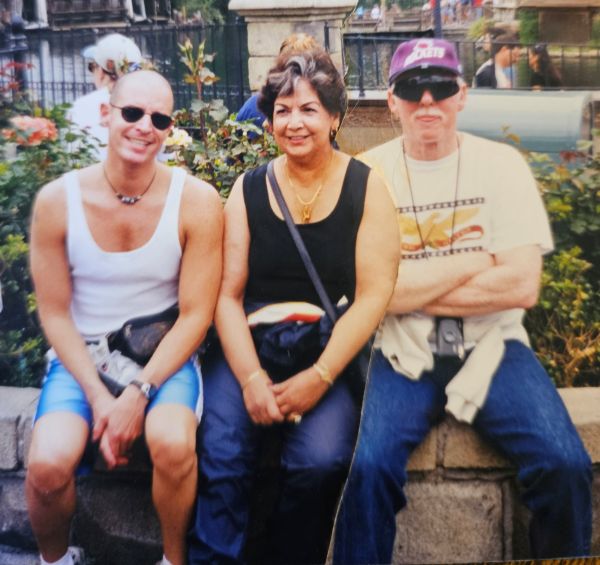
One of the strangest things about getting older is realizing that your parents were just people.
They didn’t know what they were doing either.
They had childhoods.
They had fears.
They had disappointments.
They had egos.
They had parents who screwed them up in ways they probably didn’t fully understand.
Then somebody handed them a baby and expected them to know what to do.
In my case, that baby grew into me.
My poor mother.
She never stood a chance.
But neither did I.
We were two strong-willed people trying to love each other while also trying, at various times, to make the other person behave according to the version we carried in our heads.
Listen to How I Killed My Mother
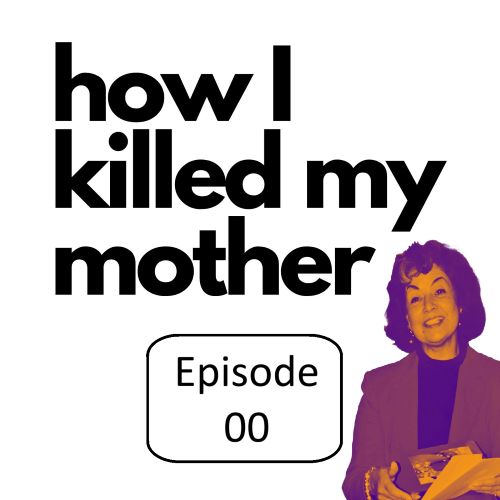
How I Killed My Mother is a memoir podcast about mothers and sons, depression and hope, family and forgiveness, caregiving, spirituality, humor, death, and the uncomfortable business of discovering who we really are.
The podcast also became the foundation for my upcoming memoir, How I Killed My Mother.
This isn’t a story about having all the answers.
It’s about what happened when I finally started asking myself the questions.
If you’re standing at the bottom of something right now, I can’t tell you how long your climb will be.
I can only tell you that I’ve stood at the bottom, too.
Climb with me.
— Jon-David
Maybe That’s What Forgiveness Actually Is
I used to think forgiveness meant deciding that something didn’t matter anymore.
I don’t believe that now.
Things matter.
Words matter.
Choices matter.
Parents can hurt children.
Children can hurt parents.
People who love each other can do enormous damage to one another.
Forgiveness doesn’t require pretending otherwise.
Maybe forgiveness is finally allowing someone to have been a complete human being.
Not the villain.
Not the saint.
Not the mother you needed.
Not the child she imagined.
Just the person who was actually there.
Flawed.
Complicated.
Trying.
Failing.
Loving.
And sometimes getting it terribly wrong.


My Mother Loved Me
So, did my mother love me—or the person she thought I was?
Both, probably.
Sometimes she loved the boy standing in front of her.
Sometimes she loved the future man she imagined.
Sometimes she confused the two.
And sometimes I helped her do it.
But underneath all of those expectations, performances, disappointments and secrets was something real.
Love.
Messy love.
Imperfect love.
Mother-and-son love.
The kind that can survive anger.
The kind that can survive disappointment.
And, as I’m discovering while writing How I Killed My Mother, maybe even the kind that can survive death.
Because all these years later, I’m still getting to know my mother.
And strangely enough, I think I’m finally letting her get to know me.
Maybe growing up isn’t when we finally become the person our parents hoped we’d be. Maybe it’s when we stop requiring them to be the parents we imagined, too.
— Jon-David
0 Comments