
I spent years blaming my mother for being controlling. Then, at nineteen years old, I accidentally became a parent—and started sounding exactly like her.

I think I really did become my mother.
Becoming Like Your Parents: The Day I Became My Mother
My mother used to say something to me when I was a kid.
One day, she promised, I would have a child just like me.
Then I’d understand.
Parents love this curse.
They say it with remarkable confidence.
Just wait until you have children of your own.
My mother seemed particularly invested in the idea.
She wanted me to have a strong-willed, obstinate, manipulative little monster who would make me understand everything I had put her through.
There was one flaw in her plan.
I was gay.
And at nineteen years old, children were nowhere on my agenda.
Apparently the Universe enjoys a technicality.
Because I didn’t have a child.
I got Stephani.
First I Got Kicked Out
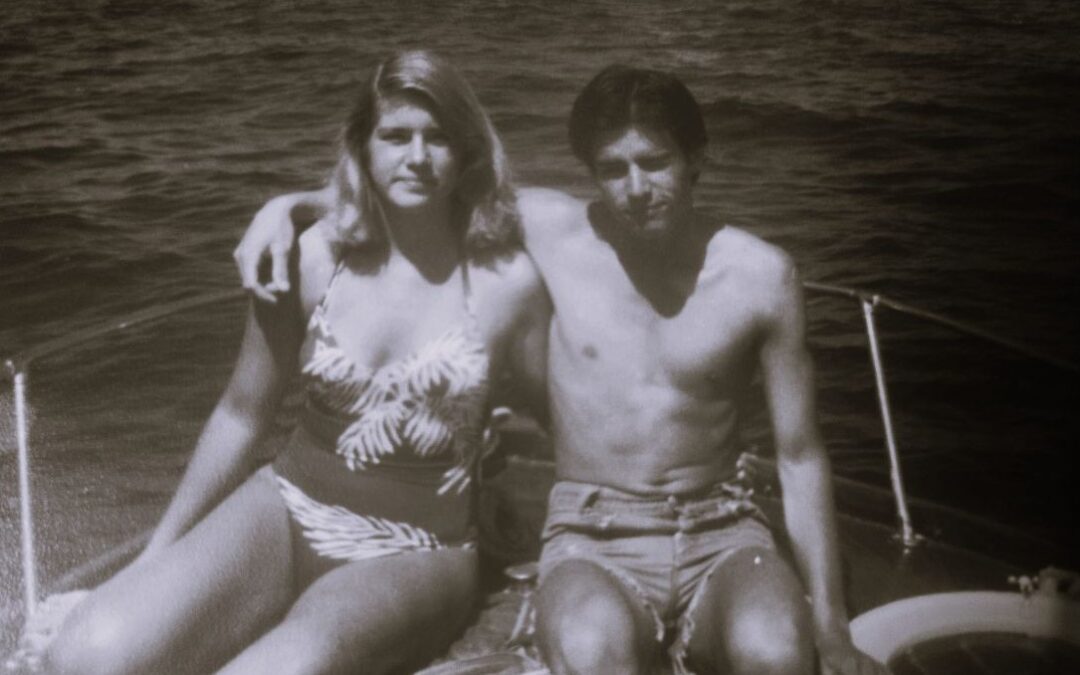
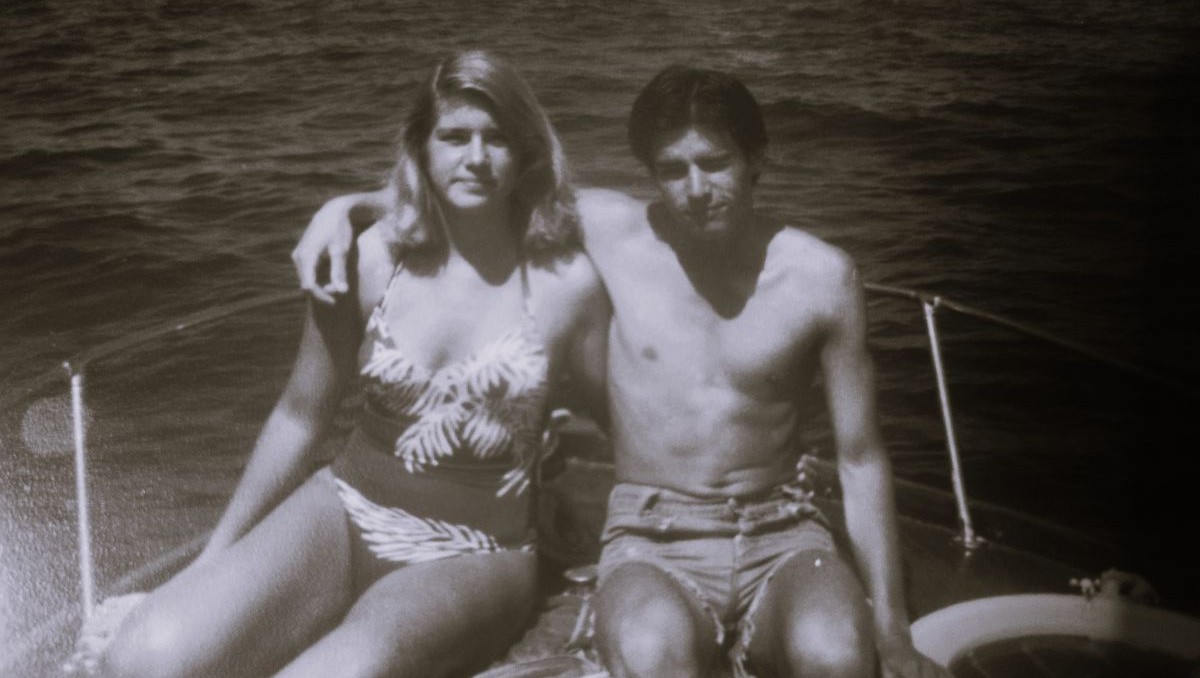
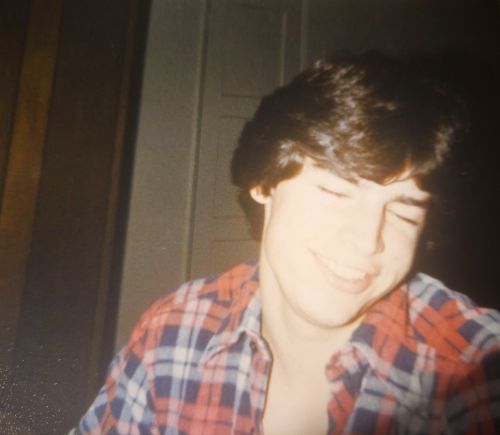
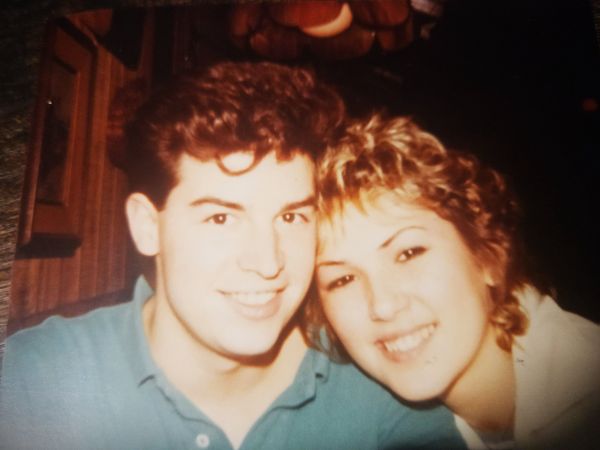
At nineteen, I walked out of my parents’ house with my boyfriend Chuck, less than two hundred dollars in my pocket, and whatever clothes happened to be on my body.
I had no apartment.
No real plan.
And suddenly no job at my father’s gas station.
At that age, however, I didn’t consider myself homeless.
I considered myself free.
Youth is useful that way.
If the same thing happened to me today, I’d probably have a nervous breakdown in a Marriott lobby.
At nineteen?
I thought I was starring in the opening scenes of my own rags-to-riches movie.
I would become wildly successful.
My mother would regret everything.
I would show her.
Anger was fuel.
Revenge was motivation.
And success would be dessert.
Healthy?
No.
Effective?
For a while.
LISTEN: Jon-David’s outrageous serialIzed podcast of mobsters, Hollywood, hair salon life, rave culure, true crime, and unbelievable stories inspired by a life that rarely went according to plan.
Start listening to
THE MAFIA HAIRDRESSER CHRONICLES →

Then Another Mother Took Me In
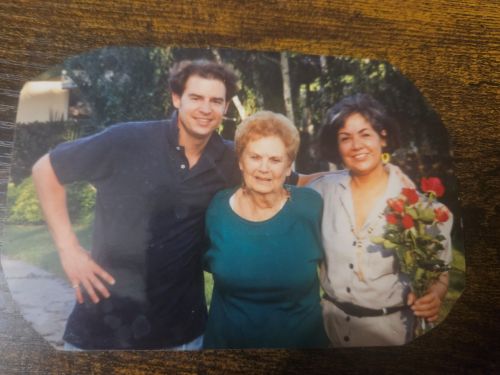
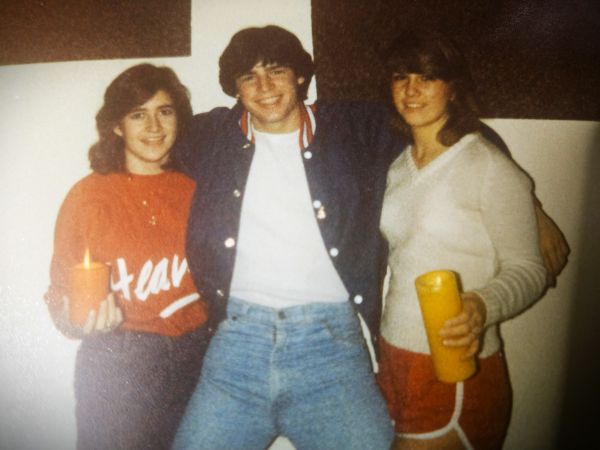
My friend Maria lived with her mother, Christine, and her younger sister, Stephani.
Christine generously offered me a place to stay.
I gave her the two hundred dollars I had.
Within a week I found a job at a grocery store while continuing beauty school.
I cooked.
I shopped.
I helped around the house.
I figured things out.
This was adulthood!
Except Christine wasn’t particularly interested in adulthood herself.
Christine was beautiful, single, and very interested in marrying a television actor.
Not metaphorically.
She had candidates.
Actors from detective shows.
She had apparently decided that somewhere in Hollywood there was a television detective waiting to become her husband.
While Maria and I worked and contributed money to the household, Christine increasingly spent her time and some of our money going to Hollywood parties where these men might appear.
I had moved out of one unusual family situation and directly into another.
Apparently normal families were booked.

THE STORIES THAT STARTED IT ALL
Mafia Hairdresser, & The Glow Stick Gods – two outrageous novels of mobsters, Hollywood, celebrities, cocaine, “Tina”, rave culture, and survival. Inspired by Jon-David’s unbelievable life.
Discover the Books →

So We Started Our Own Family
Eventually Maria and I realized something.
We could afford to live better without Christine.
So we rented our own apartment.
Maria came.
I came.
And somehow thirteen-year-old Stephani came too.
Yes.
I was nineteen.
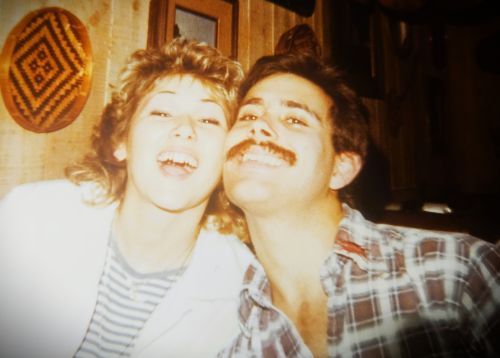
Maria was seventeen.
Stephani was thirteen.
And we rented a two-bedroom apartment.
We told the landlords Maria and I were married.
I’m not claiming any of this as sound legal or financial advice.
It was 1981.
We were young.
People asked fewer questions.
Chuck stayed with us often.
We furnished the place.
We cooked.
We worked.
We went to school.
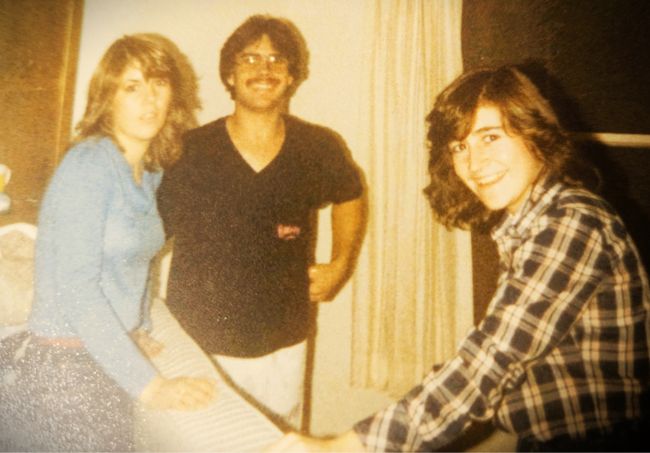
And somehow these three teenagers and one boyfriend created a little family.
It was one of the hardest and happiest periods of my young life.
Then I discovered the flaw in this adorable arrangement:
Stephani was a teenager.

My Mother’s Curse Had Arrived
Stephani was smart.
Funny.
Beautiful.
And capable of making me want to walk directly into traffic.
She had also been through a lot.
Her home life had been unstable.
Her mother was largely absorbed in her own life.
Stephani had legitimate reasons to be angry, frightened and difficult.
I understand that now.
At nineteen?
I thought she was Satan in Jordache jeans.
She didn’t want to do chores.
She didn’t want to get ready on time.
She didn’t want to go to school.
She criticized how I folded laundry.
She criticized how I talked.
She criticized my parenting despite the minor technical detail that I was not actually her parent.
She once explained that folding clothes was a “happy task” and she was too depressed to do it because John Lennon had been killed.
Try arguing with that before work.




Connect with Us on Social Media





YES. IT’S REALLY CALLED
HOW I KILLED MY MOTHER
A funny, painful, and unexpectedly hopeful memoir podcast about mothers, sons, guilt, grief, forgiveness, and the unfinished relationships we carry with us – sometimes long after the people we love are gone.
LISTEN TO HOW I KILLED MY MOTHER→

And Then Something Horrifying Happened
I began saying things my mother would say.
Pick that up.
Do your homework.
We’re going to be late.
You live under this roof too.
Why can’t you just do what I’m asking?
And the grand classic:
Because I said so.
I had spent years thinking my mother was controlling.
Bossy.
Manipulative.
Overbearing.
And suddenly I was standing in my own apartment thinking:
Why can’t this child just listen to me?
Oh.
Oh, no.
I was becoming my mother.
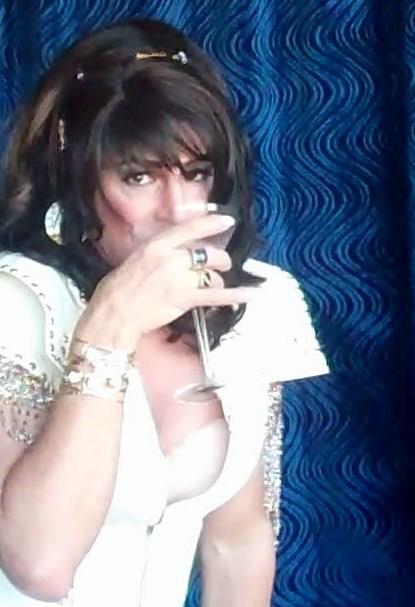
Jon-David as Judy!
Parenting Is Incredibly Easy Until You Have to Do It
Before Stephani, I had many theories about parenting.
My mother should have been calmer.
More understanding.
Less controlling.
More patient.
She shouldn’t have reacted so strongly.
She shouldn’t have tried to make me do things.
She should have understood that I was going through something.
Then I was responsible for getting a teenager to school.
Suddenly my enlightened philosophies became:
GET OUT OF BED.
It’s amazing how quickly nuance disappears when someone has ten minutes to get dressed and you also have somewhere to be.
You begin the morning believing in compassionate communication.
Seven minutes later you’re threatening consequences you don’t have the legal authority to impose.
Parenthood humbles people.
Even fake parenthood.
One Morning, I Completely Lost Control
Stephani had been depressed and withdrawn.
I didn’t understand why.
One morning she refused to get out of bed for school.
I was rushing.
I had cosmetology school.
I had responsibilities.
And I was frightened that if she became truant, someone might discover that neither Maria nor I was her legal guardian.
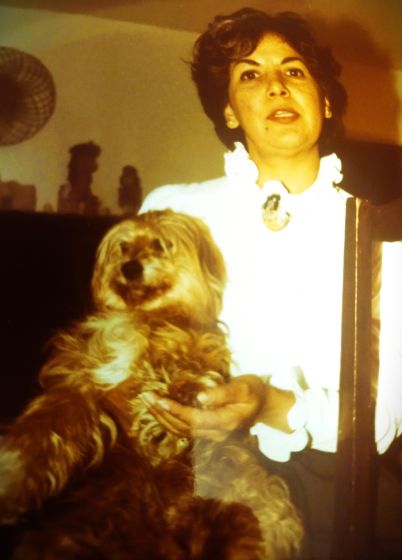
So I did what I thought my mother would have done.
I threatened.
I reasoned.
I manipulated.
I tried guilt.
I tried fear.
I warned her that authorities could intervene.
Nothing worked.
Finally, I marched into the bedroom and pulled the blankets off her bed as if I were going to physically get her dressed.
Stephani exploded.
She screamed.
She called me names.
She called me a pervert.
She yelled loudly enough that I became convinced the police were about to arrive and arrest me.
Suddenly I wasn’t an authority figure.
I was nineteen years old and terrified.
So what did I do?
I Called My Mother
Of course I did.
The same mother I was still angry with.
The same mother I wanted to prove wrong.
The same mother I blamed for half my personality.
I grabbed the phone and essentially said:
Mom, fix my life.
And she laughed.
Not cruelly.
Well…
Maybe a little.
She had been waiting for this moment for approximately nineteen years.
Her prophecy had come true.
Jon-David finally had a Jon-David.
Mom told me something simple.
Whatever Stephani was going through probably wasn’t actually about me.
Leave her alone.
Give her time.
She’d tell us eventually.
I listened.
And naturally…
Mom was right.
I hate when that happens.
It Wasn’t About Me
Later, Maria told me what had happened.
Kids at Stephani’s school had learned that she was living with her teenage sister and an older man.
Me.
Her family situation was unusual.
They teased her.
She was embarrassed.
She already had abandonment issues involving her mother.
She didn’t know where to put all those feelings.
So she put them on me.
And suddenly I understood something about my own childhood.
How many times had I come home angry about something that happened at school and taken it out on Mom?
How many times had I been ashamed, frightened, rejected or confused—and turned my mother into the enemy because she was there?
How many times had she been standing in the kitchen thinking:
What the hell did I do?
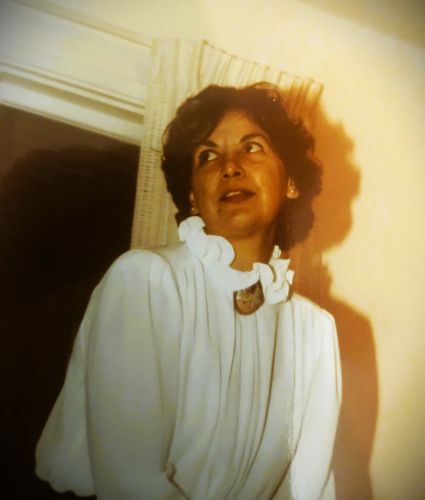
I called her again.
And apologized.
My Mother Loved Those Phone Calls
Oh, she loved them.
Every tear.
Every apology.
Every:
“Mom, I am so sorry for what I put you through.”
She’d been waiting decades for this material.
She reminded me gently that I’d been difficult too.
And then she did something that matters to me more now than it did then.
She told me:
I turned out all right.
Think about that.
Our relationship was still damaged.
She was still angry about Chuck.
I was still angry about her reaction to me being gay.
We had plenty of unresolved hurt.
But when I was drowning as a nineteen-year-old trying to care for someone else’s child, my mother didn’t tell me I was getting what I deserved.
Well, maybe she enjoyed the irony.
But she helped me.
She reassured me.
She gave me advice.
She told me Stephani could turn out okay because I had turned out okay.
That was generous.
Understanding Your Mother Doesn’t Mean She Was Always Right
This is important.
Becoming responsible for Stephani didn’t suddenly make everything my mother had done acceptable.
I didn’t think:
Oh! Now I understand the shock-treatment threat! Excellent parenting, Mom.
No.
Understanding someone is not the same as absolving them.
People can love us and hurt us.
Parents can have good intentions and make terrible choices.
Children can be genuinely mistreated and still have behaved terribly themselves.
Two things can be true.
Sometimes twelve things can be true.
That’s what makes families so exhausting.
But Stephani gave me something I didn’t have before.
Perspective.
For the first time, I saw motherhood from the other side of the argument.
Then I Made the Same Mistake My Mother Made
Here’s where this story becomes uncomfortable for me.
Because eventually I went beyond merely sounding like Mom.
I repeated one of her biggest mistakes.
I began thinking I knew what was best for Maria and Stephani.
Not just household rules.
Their lives.
Their relationships.
Their choices.
When Stephani later became pregnant, I became furious.
I said things I had no right to say.
I made demands I had no right to make.
She stopped speaking to me.
When Maria began dating someone I didn’t approve of, I did essentially the same thing.
I told her what I thought.
I tried to exert control over a life that wasn’t mine to control.
And Maria eventually stopped speaking to me too.
The audacity.
I had spent years furious at my mother for trying to dictate who I could love.
Then I turned around and behaved as though I had some authority over who the people I loved should be with.
That’s a rough mirror.
We Don’t Only Inherit Our Parents’ Good Qualities
We like talking about inherited traits when they’re flattering.
I got Mom’s humor.
Her creativity.
Her strength.
Her youthfulness.
Her ability to survive.
Wonderful.
But what about the other things?
The control.
The stubbornness.
The certainty that you know what’s best for another person.
The instinct to interfere because you call it love.
Those things can travel through families too.
Not genetically, necessarily.
Behaviorally.
We learn relationships by watching relationships.
Then one day we hear ourselves saying something and think:
Who said that?
Oh.
Mom.
And apparently now me.
My Mother’s Wish Came True
Mom always wanted me to experience raising a child like myself.
The Universe gave her Stephani.
Not my daughter.
Not even technically my ward.
But enough.
Enough for me to learn what helplessness feels like.
Enough to experience loving someone whose behavior is making you insane.
Enough to understand that sometimes a kid’s anger has very little to do with you.
Enough to call my mother crying.
Enough to apologize.
Enough to understand her better.
But there was one final twist.
I eventually behaved worse than Mom in one important way.
After I left home, she kept calling me.
She made sure I knew I was still her son.
She kept a line open.
Even while we were furious with each other.
Even when Chuck remained the unmentionable wall between us.
She didn’t completely close the door.
When I became controlling with Maria and Stephani, I allowed those relationships to break completely.
They disappeared from my life.
That hurts to admit.
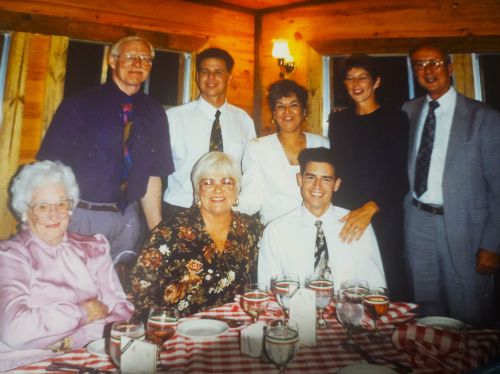
My Mother Was Better at Family Than I Was
There’s a sentence teenage Jon-David would never have believed I’d write.
My mother was better at family than I was.
Not perfect.
God, no.
Neither of us would survive that lie.
But she understood something I didn’t.
You can be angry and still call.
You can disagree and still invite someone to Christmas.
You can carry resentment and still answer the phone.
You can be deeply hurt and still say:
I’m your mother. I’m still here.
I wish I had understood that sooner.
I wish I’d done that with Maria.
I wish I’d done that with Stephani.
I miss them.
And I’m sorry.
Maybe This Is What Parents Mean by “You’ll Understand Someday”
I used to hate that phrase.
You’ll understand when you’re older.
It’s condescending.
And unfortunately…
sometimes true.
Age doesn’t always prove our parents were right.
But it does give us information we didn’t have.
You experience love.
Responsibility.
Failure.
Fear.
Money.
Caregiving.
Loss.
Other people’s impossible behavior.
Your own impossible behavior.
And eventually you revisit childhood memories carrying an entirely different toolbox.
The story changes.
Not the facts.
Your understanding of them.
I don’t look back now and say my mother was right about everything.
I look back and say:
I understand more.
That’s better.
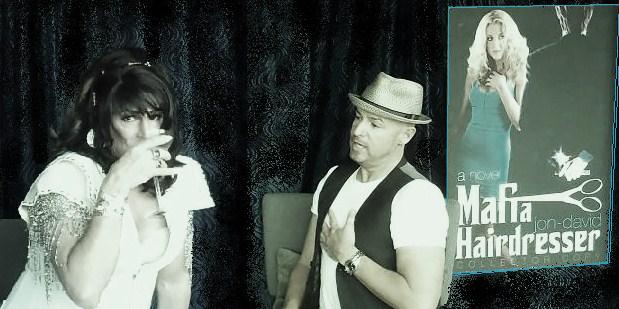
Jon-David was once a popular drag performer!
I Became My Mother—and Then I Became Myself
Maybe that’s what growing up ultimately requires.
First we become our parents.
Then we notice.
Then, if we’re lucky, we decide which parts to keep.
From my mother I’ll keep:
The humor.
The strength.
The creativity.
The determination.
The open door.
The phone call after the fight.
The belief that someone can drive you absolutely insane and still turn out all right.
I’ll try to leave behind:
Control disguised as love.
Certainty about other people’s lives.
The belief that loving someone gives you authority over them.
And I’ll keep one more thing Mom gave me.
Perspective.
Because the greatest revenge I ever planned against my mother was to become wildly successful without her.
Instead, life gave me something much more useful.
It made me understand her.
Damn it.
She won again.
— Jon-David
More From How I Killed My Mother
How I Killed My Mother is my memoir podcast about family, forgiveness, identity, humor, grief, caregiving, spirituality and the uncomfortable discovery that our parents sometimes make more sense after we begin repeating their mistakes.
Listen to the podcast and join my mailing list at HowIKilledMyMother.com for new stories, bonus material and updates about the upcoming memoir.
And ask yourself:
What did you once hate about your parents—only to hear yourself saying or doing the exact same thing years later?
0 Comments